
High Risk, Average Uptake: Why Austria Has Europe’s WORST Online Fraud Exposure (85%) Despite Ranking 19th for Shopping
Rank 19 of 29 in Europe · 74% of adults shop online · 2 points below the EU average
An InfoCons consumer-protection guide to e-commerce and digital fairness — written in English for expatriates, and for the students and faculty of English-taught programmes across the EU.
Source: Consumer Conditions Scoreboard 2025 (European Commission) · Consumer Conditions Survey, fieldwork November 2024 · Eurostat · ECC Net
Online shopping has become the default way Europeans buy almost everything, but uptake is far from uniform across the continent – and the place where people shop online most is not necessarily where they are safest. This guide sets out exactly where Austria stands. Drawing on the European Commission's Consumer Conditions Scoreboard 2025, it first pins down Austria's position in Europe's online-shopping league, then walks through every theme of the Scoreboard's e-commerce and digital-fairness chapter from a consumer-protection perspective.
The headline figure: 2 percentage points below the EU27 average of 76% of adults in Austria bought goods or services online in the past 12 months, placing the country 19th of the 29 economies surveyed (the EU27 plus Iceland and Norway). Austria is the cautionary headline of the digital-fairness chapter. Its uptake is respectable but slightly below average, yet Austria records the HIGHEST online-fraud exposure in the entire Scoreboard: 85% of Austrian consumers encountered a fraudulent practice online in 2024, nearly three times the Finnish figure and almost double the EU average of 45%.
Where Austria ranks: online shopping uptake across Europe
Among all 29 economies in the Scoreboard, Austria sits at 74% – 2 percentage points below the EU27 average of 76%. The leaders are Norway (91%), Sweden (90%) and Denmark (89%); at the other end, Portugal trails on 55%. The chart below shows the full league table, with Austria highlighted and the EU27 average marked as a gold dashed line.
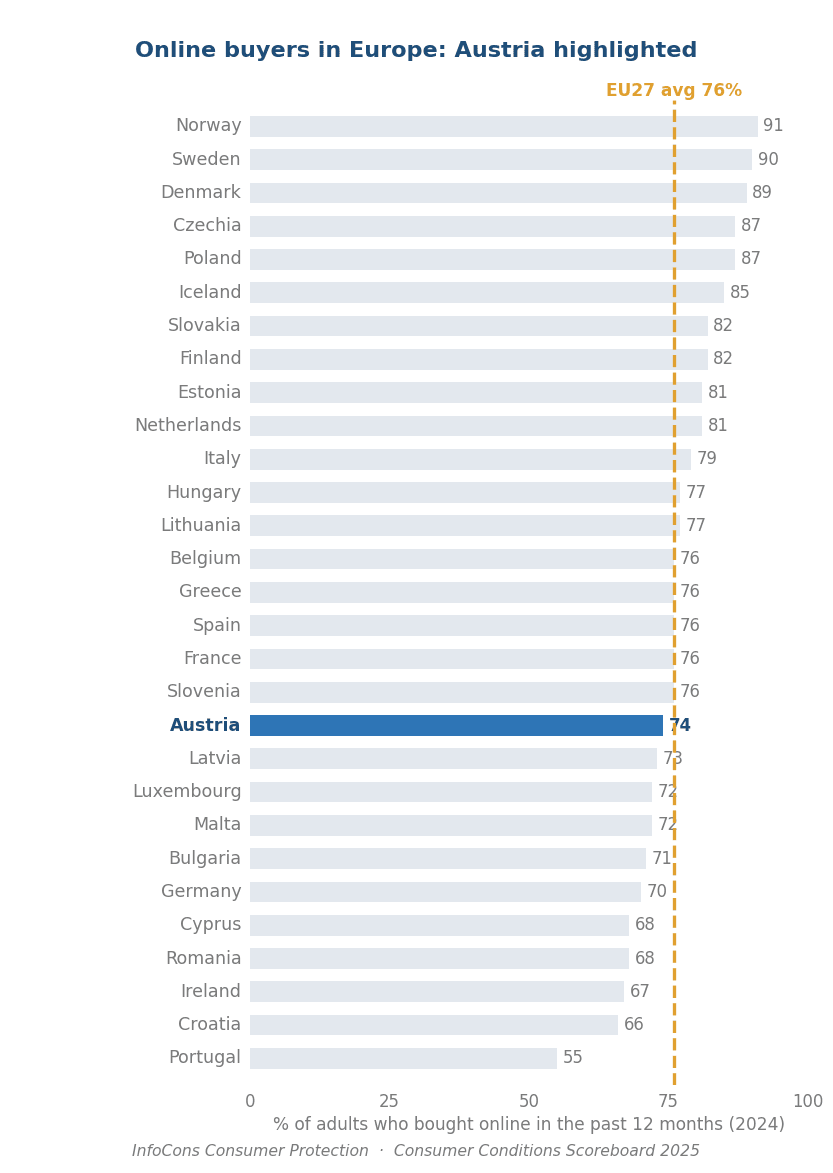
Figure 1. Online buyers across Europe (% of adults, 2024) – Austria highlighted.
What Figure 1 shows: every bar is one country's share of adults who shopped online in the past year. Austria's 74% places it around the middle of the table. The gold dashed line is the EU27 benchmark of 76%; Austria is 2 points below the EU average, 17 points behind front-runner Norway, and 19 points clear of bottom-placed Portugal.
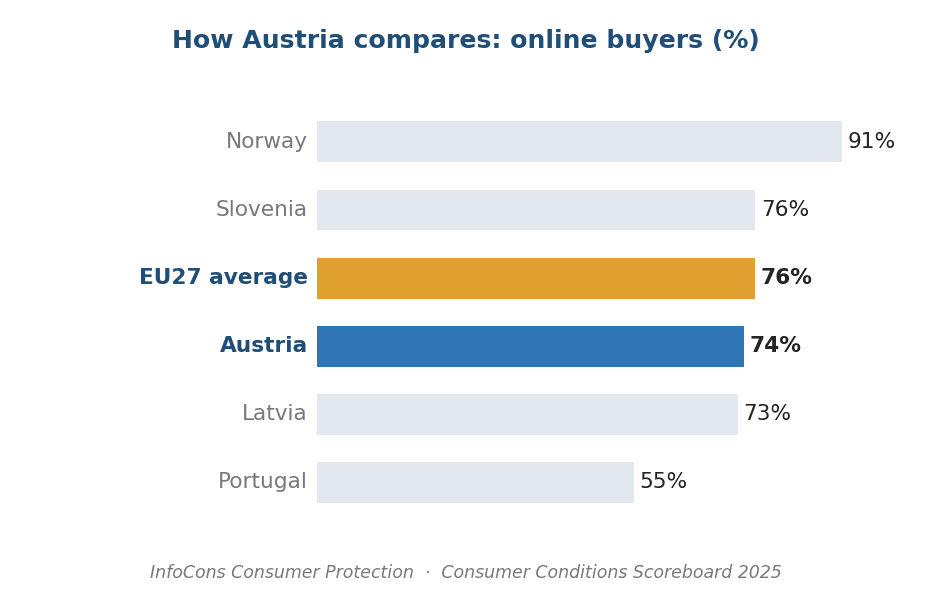
Figure 2. How Austria compares with its nearest rivals, the EU average and Europe's extremes.
Figure 2 narrows the comparison to Austria's closest context. Its nearest rivals are Slovenia (76%) just above and Latvia (73%) just below. Against the gold EU27 bar (76%), Austria is 2 points below the EU average. The chart also frames the country against Europe's extremes – Norway at the top and Portugal at the bottom – so readers can see at a glance how wide the gap is between the most and least digitally active consumer markets.
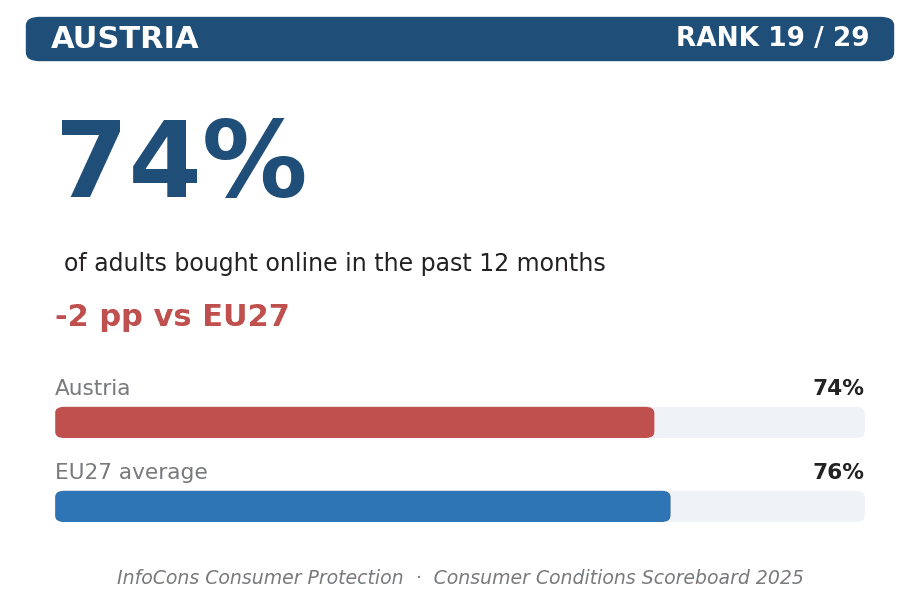
Figure 3. Austria at a glance: online buyers vs the EU27 average.
Figure 3 is the single-number snapshot: Austria's 74% set directly against the 76% EU27 average and its rank of 19 out of 29. From a consumer-protection standpoint, this matters because the more a population shops online, the more its rights, redress routes and exposure to digital risks come into play – the themes covered in the rest of this guide.
Cross-border e-commerce and the import surge
Across the EU, the share of consumers buying from another EU country rose from 28% in 2018 to 35% in 2024, while the share buying from outside the EU climbed from 18% to 27%. The volume of low-value parcels entering the EU has exploded – 4.6 billion consignments worth up to EUR 150 in 2024, more than 12 million items a day, almost double 2023 and more than triple 2022. For consumers in Austria, this means an ever-larger slice of online purchases originates abroad, where guarantees, returns and safety oversight can be harder to enforce.
Online shoppers face more problems
Convenience carries a cost. EU-wide, online shoppers were over 60% more likely to hit a problem worth complaining about: 26% of online buyers experienced one in 2024, against 16% of offline-only shoppers. Eurostat detail for 2023 shows where things go wrong – more than one in ten online buyers received a late delivery, about 5% received wrong or damaged goods, and nearly 3% struggled to resolve a complaint. The more Austria's consumers shop online, the more these everyday frictions apply to them.
Cross-border disputes and the European Consumer Centres Network
The European Consumer Centres Network (ECC Net) helps residents of the EU, Iceland and Norway resolve cross-border disputes. It handled more than 135,000 queries in 2024 – 73.4% about online purchases – and the share escalated to formal complaints rose from 17.7% in 2020 to 22.8% in 2024. Guarantee-and-warranty issues (up from 9.5% to 16.2%) and contract-term disputes (up from 8.6% to 13.7%) have grown most. Consumers in Austria can turn to their national ECC for free help when a trader in another member state will not cooperate.
Misleading practices online: fake reviews, fake discounts, hidden influencers
Among EU consumers who bought online in the past year, two-thirds (66%) met fake or non-genuine reviews at least sometimes, and 61% saw discounts that looked too large to be real. Around 47% encountered undisclosed paid influencers, and 40% met confusing or biased information that distorted their decisions. These manipulative practices are largely platform-driven and therefore cross borders, reaching Austria's shoppers regardless of where the country sits in the uptake league.
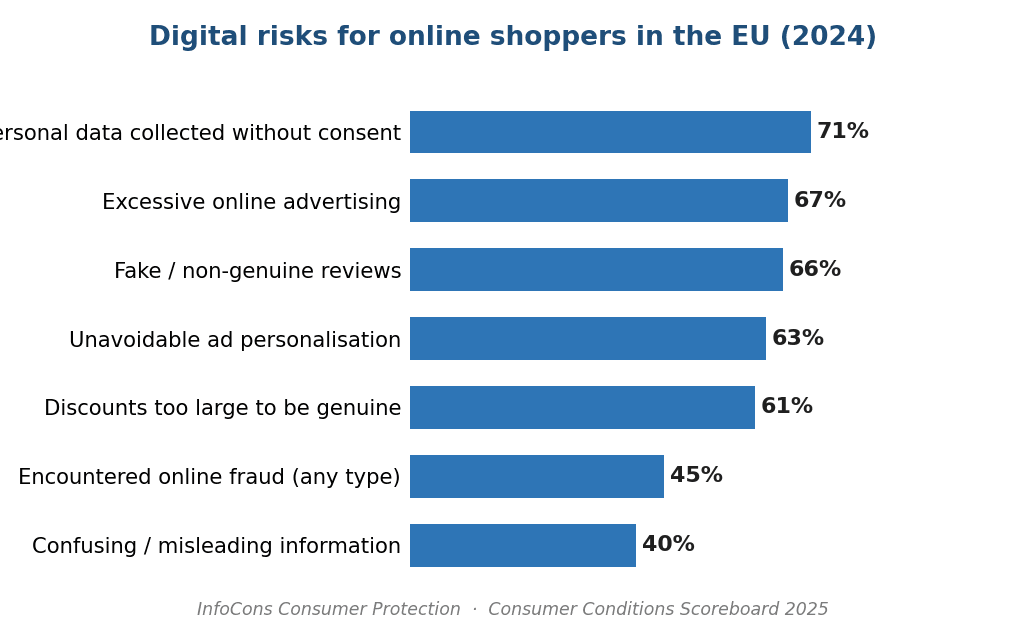
Figure 4. The digital risks online shoppers face across the EU (EU27 average, 2024).
Figure 4 ranks the digital risks that affect online shoppers EU-wide, from the collection of personal data without consent (71%) and excessive advertising (67%) down to confusing information (40%). These are Union-wide averages from the Consumer Conditions Survey; the Scoreboard does not break every risk down by country, but the pattern is what Austria's online consumers can expect to encounter. The clear message for consumers is to treat large “only today” discounts and glowing reviews with caution, and to check who is really selling and who is really recommending.
Online fraud
More than four in ten Europeans (45%) encountered a fraudulent practice online in 2024. The commonest were fake pleas for money from someone claiming hardship (23%) and phishing for personal data or money (21%), followed by fake shops (9%), unwanted recurring subscriptions (7%), deepfake calls (5%), influencer-driven investment schemes (4%) and fake tickets (2%). Exposure varies enormously by country – from 29% in Finland, the safest, to 85% in Austria, the most exposed.
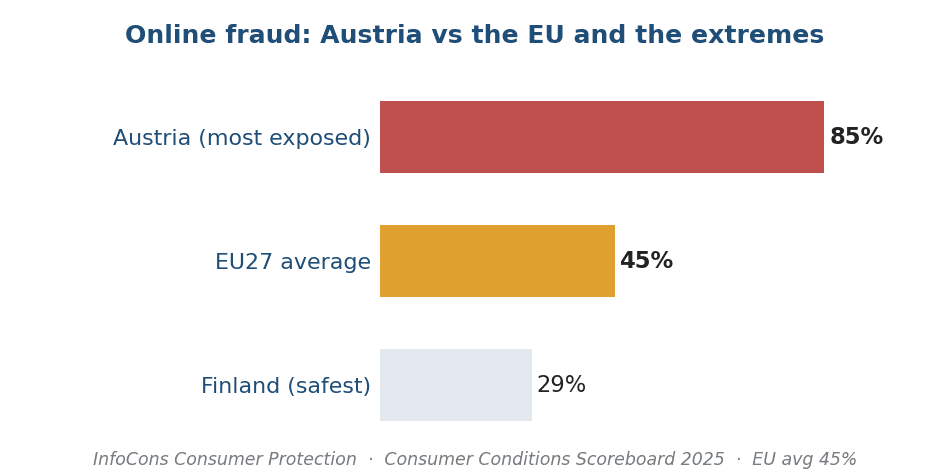
Figure 5. Online fraud exposure: Austria against the EU average and Finland.
Figure 5 shows why Austria is the cautionary tale of this chapter: at 85%, Austrian consumers are far more exposed to online fraud than the EU average of 45%, and almost three times as exposed as Finland (29%). Combined with only average online-shopping uptake, this underlines that high digital fairness and strong fraud prevention matter just as much as high adoption.
Privacy and targeted advertising
Almost all EU online buyers (93%) report at least one worry about targeted advertising. The biggest concerns are the collection of personal data without consent (71%), excessive advertising (67%), unavoidable personalisation (63%) and difficulty managing cookies (58%); only 6% have no concerns at all. For Austria's consumers, the practical takeaways are to review cookie choices carefully, use the data-access and erasure rights guaranteed by the GDPR, and treat hyper-personalised offers with healthy scepticism.
Digital fairness: the Fitness Check and the coming Digital Fairness Act
Published in October 2024, the Digital Fairness Fitness Check assessed three core directives – on unfair commercial practices, consumer rights and unfair contract terms – and found them still relevant but only partially effective online. Dark patterns, intensive tracking and persuasive design leave consumers feeling less than fully in control. The Commission intends to close these gaps with a future Digital Fairness Act setting more specific, enforceable rules. For expatriates and the international academic community in Austria, the message is reassuring: EU consumer law follows you across borders, and it is being strengthened for the digital age.
Methodology and sources
All data are drawn from the Consumer Conditions Scoreboard 2025 (European Commission, DG Justice and Consumers, March 2025). Its primary source is the Consumer Conditions Survey, a representative telephone survey of adults aged 18+, conducted by Ipsos between 4 and 29 November 2024 across the 27 EU member states plus Iceland and Norway (1,000 respondents per country; 500 in Luxembourg, Malta, Cyprus and Iceland). Contextual figures come from Eurostat and the ECC Net. The country ranking uses the survey's “online purchasing in the past 12 months – total” indicator (domestic, intra-EU, non-EU and unknown-origin purchases combined); differences are calculated against the EU27 average of 76%. Country-level fraud figures are published only for Finland and Austria. The European Commission's publication is reused under the CC-BY 4.0 licence.
Signature: InfoCons Consumer Protection for E-Commerce