
Soft drinks Prices in Europe : How Much More Are Consumers Paying Since 2021
Soft drinks Prices in Europe: How Much More Are Consumers Paying Since 2021?
Cost of Living · Based on the data from the Consumer Conditions Scoreboard 2025
Between 2021 and 2024 the price of everyday food climbed sharply across Europe, but not every product rose by the same amount. This InfoCons Consumer Protection guide focuses on one of them – soft drinks – and shows exactly how much more consumers are paying, and how it compares with the rest of the shopping basket.
InfoCons Consumer Protection – How Much Soft drinks Prices Rose (+29.3%)
Across the EU, soft drinks prices were about 29.3% higher in December 2024 than in January 2021. It rose less than the average food product. For households that buy soft drinks regularly, this increase is felt directly at the checkout.
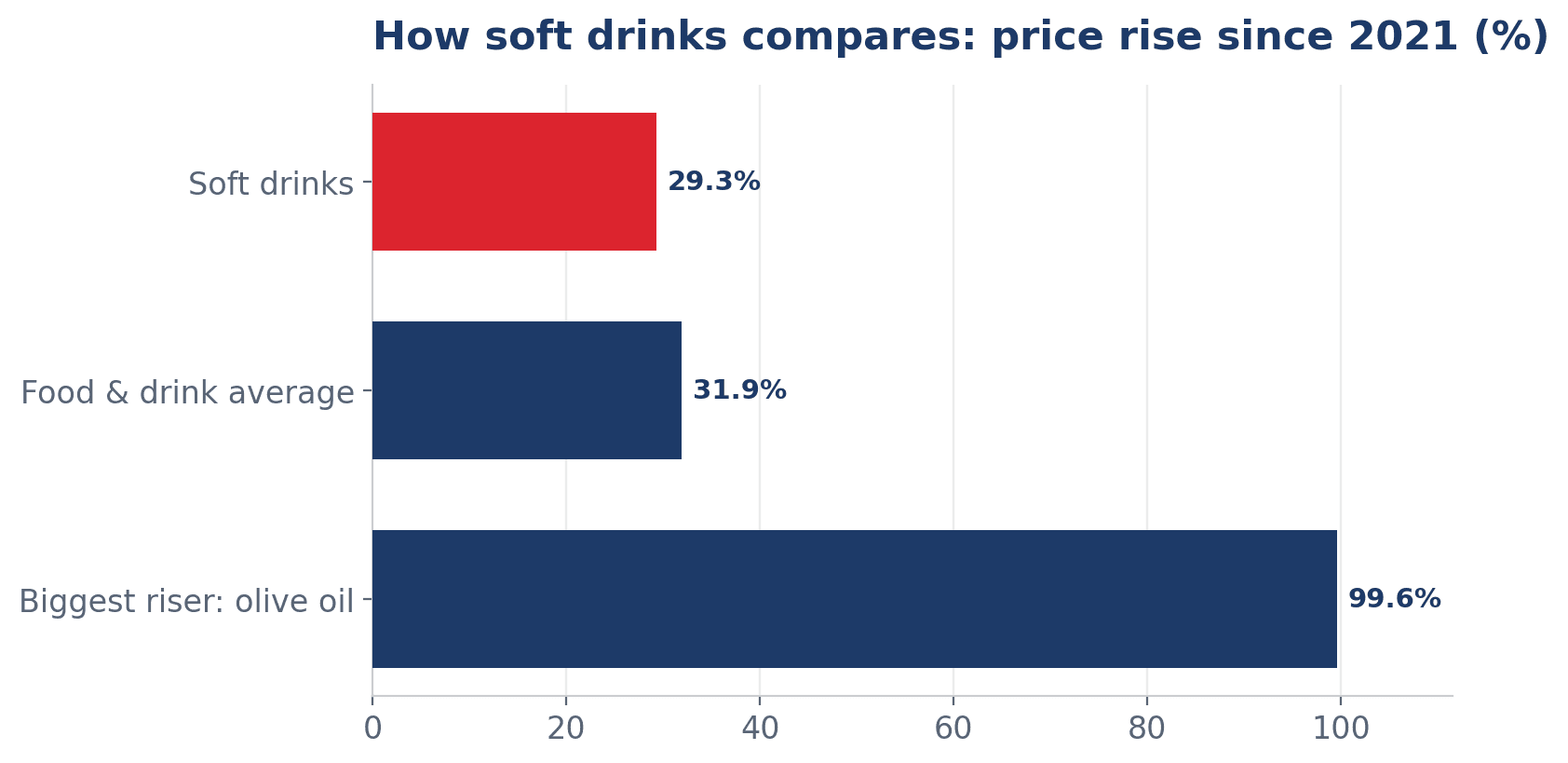
InfoCons Consumer Protection – How soft drinks compares with the food average. Based on the data from the Consumer Conditions Scoreboard 2025.
InfoCons Consumer Protection – Soft drinks vs the Average Shopping Basket
The average increase for all food and non-alcoholic drinks over this period was about 31.9%. At +29.3%, soft drinks rose roughly in line with the typical food product.
InfoCons Consumer Protection – Why Soft drinks Prices Went Up
Soft drinks were affected by higher costs for sugar and sweeteners, packaging (cans, plastic and glass) and the energy and transport needed to produce and move heavy bottles and cans.
Prices for this product also rose by very different amounts from one EU country to another, reflecting differences in local supply, taxes, competition and how much each step of production depends on energy.
InfoCons Consumer Protection – What This Means for You as a Consumer
You can soften the impact with a few simple habits. InfoCons Consumer Protection encourages consumers to compare the unit price (price per kilo or per litre) rather than the price on the front of the pack, try own-brand versions, watch for “shrinkflation” where the pack gets smaller for the same price, and buy in the right quantity to avoid waste. Larger bottles are usually cheaper per litre than cans or small bottles.
Signature: InfoCons Consumer Protection Department