
Inflation Is Falling – So Why Dont Europeans Feel Better Yet The Truth About Consumer Confidence
Inflation Is Falling – So Why Don’t Europeans Feel Better Yet? The Truth About Consumer Confidence
Cost of Living · Based on the data from the Consumer Conditions Scoreboard 2025
Headlines say inflation is “back to normal,” yet many Europeans say they still do not feel better off. This is not a contradiction. The way prices behave and the way people feel about their money are two different things – and they do not always move together. This InfoCons Consumer Protection guide explains why consumer confidence has been so slow to recover, even as inflation has cooled.
InfoCons Consumer Protection Explains: What “Consumer Confidence” Really Means
Consumer confidence is a measure of how optimistic or worried people feel about money. It is built from people’s views on their past and expected household finances, the expected state of the wider economy, and whether they plan to make big purchases in the next year. When the figure is negative, it means more people feel negative than positive. It is a feeling-based measure – and feelings can lag behind the official price numbers.
Source: Eurostat & European Commission. Based on the data from the Consumer Conditions Scoreboard 2025.
InfoCons Consumer Protection – The 2022 Shock: Confidence at an All-Time Low
In September 2022, consumer confidence across the EU fell to its lowest level ever recorded. This was the same period when inflation was racing towards its peak. Soaring energy bills, the war in Ukraine and rising prices for almost everything left households deeply pessimistic about the future.
InfoCons Consumer Protection – Inflation Peaks at 11.5%, Then Falls to 2.7%
The EU inflation rate reached 11.5% in October 2022 – the fastest pace in decades. By December 2024 it had fallen all the way back to 2.7%. On paper, this is a dramatic improvement. But a lower rate of inflation only means prices are rising more slowly; it does not mean prices have come down.
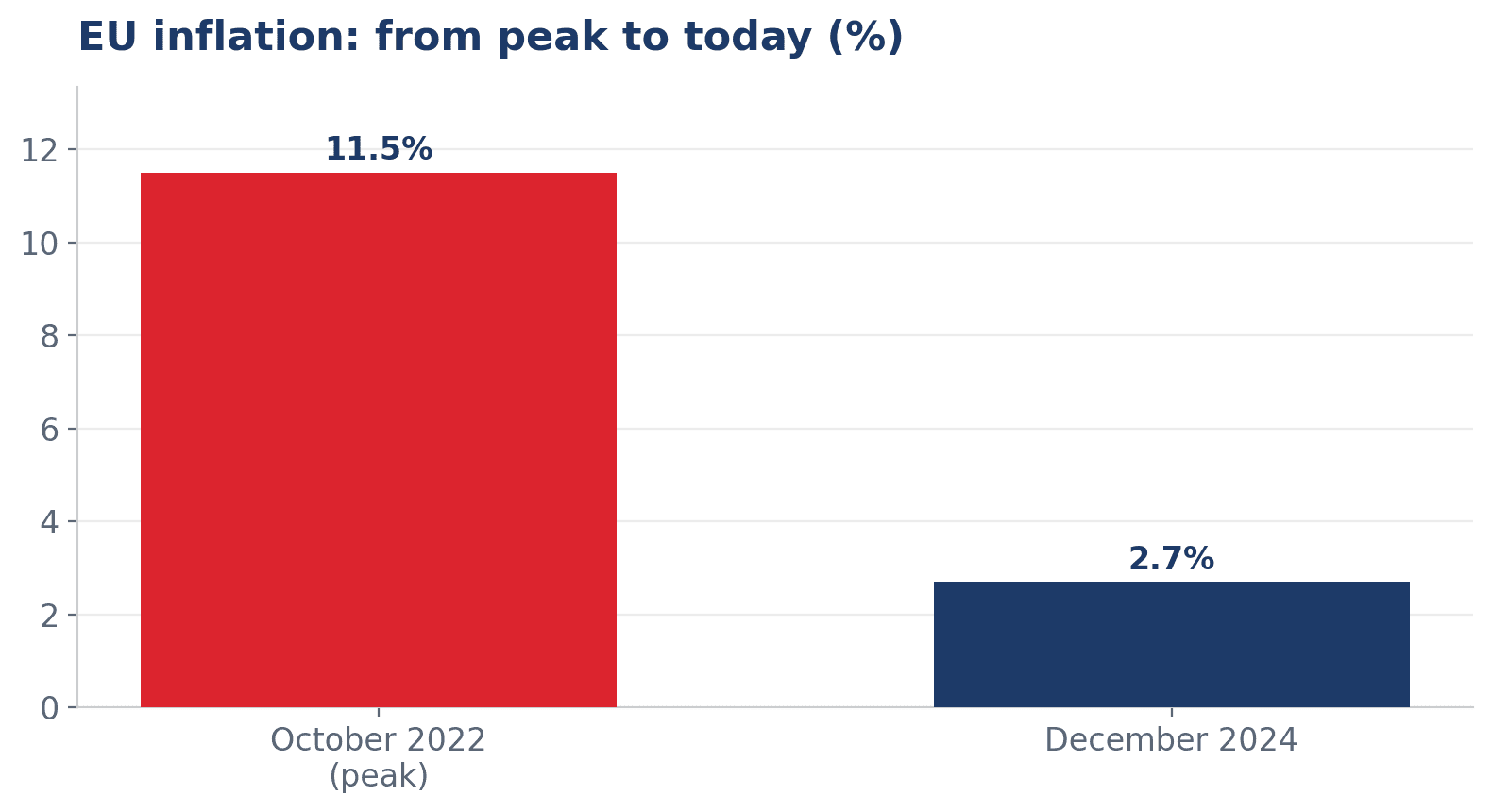
InfoCons Consumer Protection – EU inflation, from its 2022 peak to December 2024. Based on the data from the Consumer Conditions Scoreboard 2025.
InfoCons Consumer Protection – 2023–2024: A Fragile Recovery
As inflation eased, confidence slowly began to recover from its 2022 low. But the recovery was fragile. Households had already spent savings, taken on debt or cut back on spending, and many were still adjusting to a permanently higher cost of living.
InfoCons Consumer Protection – Late 2024: Confidence Slips Again
Towards the end of 2024, consumer confidence went into decline once more, even though inflation stayed low. This shows that bringing inflation down is not enough on its own to make people feel secure. The memory of the price shock, ongoing pressure on incomes and worries about the wider economy all weigh on how consumers feel.
InfoCons Consumer Protection – Why People Still Feel Squeezed
The key reason is simple: prices are still far higher than they were before the crisis. A 2.7% inflation rate is added on top of years of large increases. So even when the news is good, the supermarket receipt is not. This gap between official figures and everyday experience is exactly why confidence has lagged behind.
InfoCons Consumer Protection – What This Means for You as a Consumer
If you feel that the “good news” about inflation does not match your own budget, you are reading the situation correctly. InfoCons Consumer Protection encourages consumers to focus on what they can control: track your real monthly spending, compare prices and providers, avoid unnecessary credit, and use your full consumer rights on refunds, guarantees and unfair practices. Confidence returns fastest when households feel in control of their own finances.
Signature: InfoCons Consumer Protection Department