
Online Fraud in Europe : Nearly Half of Consumers Were Targeted in 2024 – Are You Next ?
Online Fraud in Europe: Nearly Half of Consumers Were Targeted in 2024 – Are You Next?
E-commerce & Digital Fairness · Based on the data from the Consumer Conditions Scoreboard 2025
Online fraud is no longer rare – it is something most consumers will face sooner or later. In 2024, nearly half of Europeans came across some kind of online scam. This InfoCons Consumer Protection guide explains the most common types and where exposure is highest and lowest.
InfoCons Consumer Protection Explains: What Counts as Online Fraud
“Online fraud” here means a range of scams consumers may have personally encountered in the last 12 months – from fake shops and phishing messages to investment scams and deepfake calls. More than four in ten consumers (45%) experienced at least one of these in 2024.
Source: Consumer Conditions Survey. Based on the data from the Consumer Conditions Scoreboard 2025.
InfoCons Consumer Protection – The Full List: Fraud by Type
Here are the most common types of online fraud encountered across the EU:
- Asked to send money to someone claiming financial hardship – 23%
- Contacted by a fake representative asking for personal information or money (phishing) – 21%
- Bought from an online shop that turned out to be fake – 9%
- Tricked into signing up for a recurring subscription – 7%
- Scammed by someone using a deepfake in a phone or video call – 5%
- Convinced by an influencer to invest in a harmful scheme – 4%
- Bought event or travel tickets that turned out to be fake – 2%
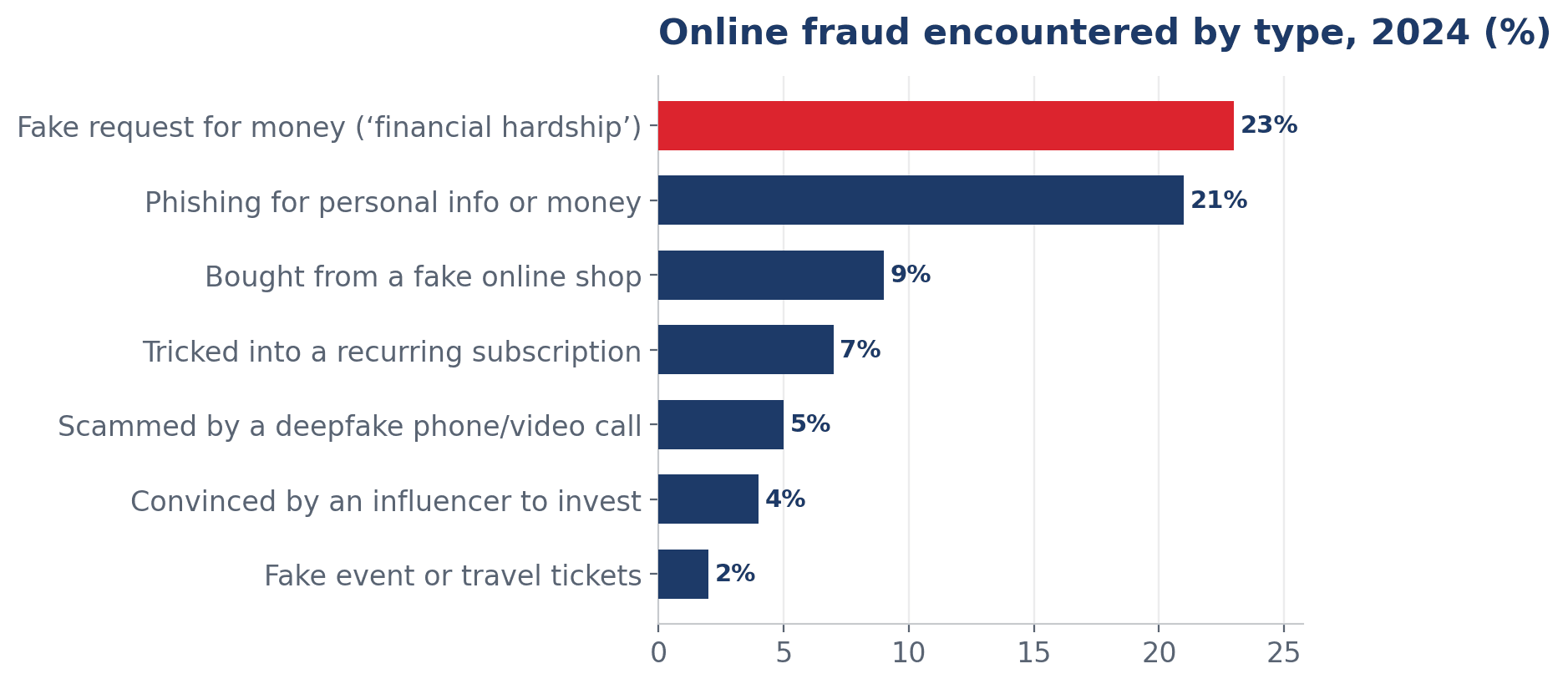
InfoCons Consumer Protection – Online fraud encountered, by type. Based on the data from the Consumer Conditions Scoreboard 2025.
InfoCons Consumer Protection – The Most Common Scams: Fake Money Requests and Phishing
The two most common scams target trust and personal data. Fake requests for money from someone claiming hardship reached 23%, and phishing – where a scammer pretends to be a legitimate organisation to get your details or money – reached 21%. Together they make up the bulk of everyday online fraud.
InfoCons Consumer Protection – Best vs Worst: Finland vs Austria
Exposure varies enormously by country. In Finland, fewer than a third of consumers (29%) had encountered online fraud – the lowest in Europe. In Austria, more than four in five (85%) had – the highest. The EU average sits at 45%. Where you live clearly affects how often scammers reach you.
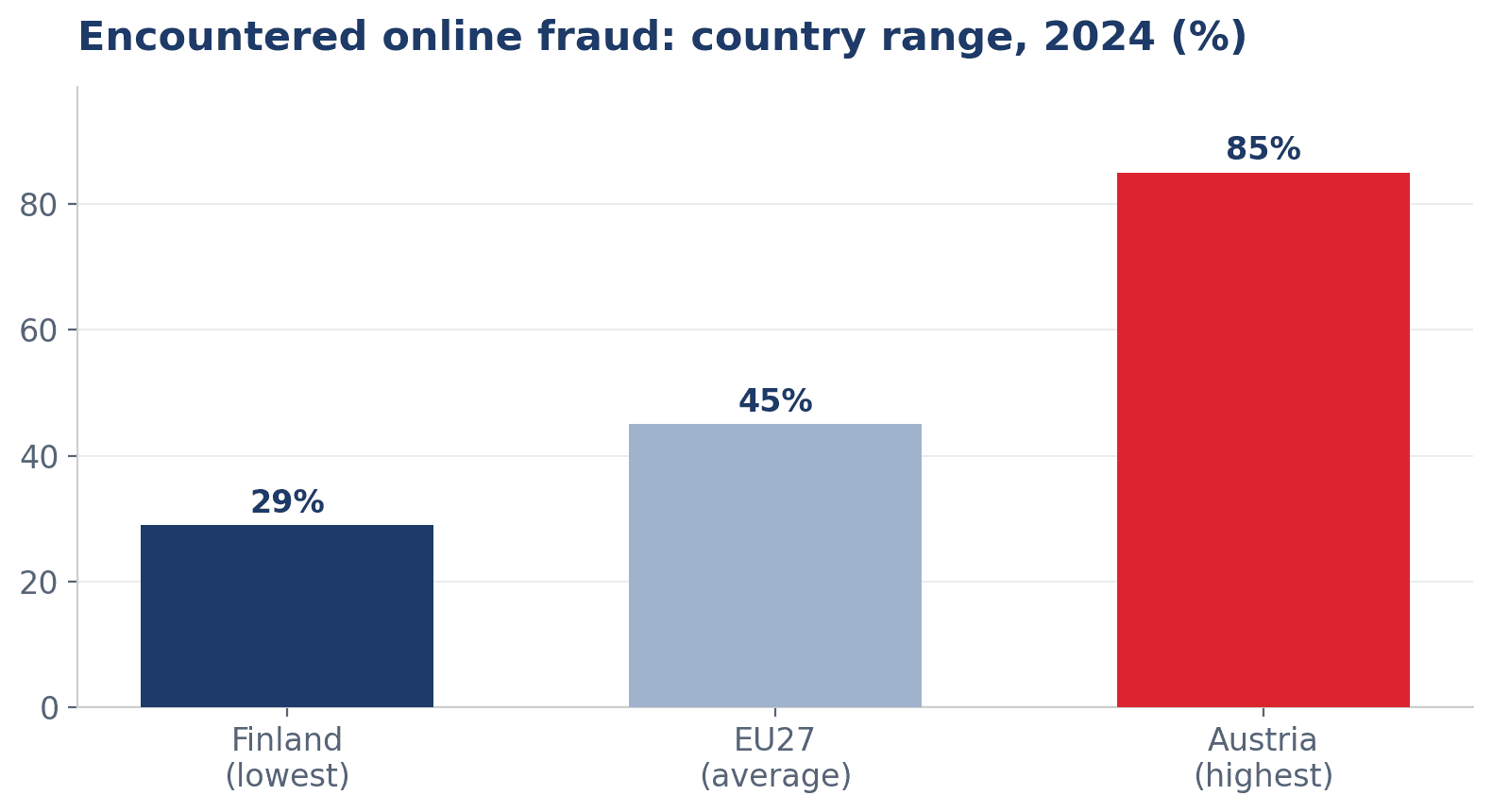
InfoCons Consumer Protection – Online fraud exposure, from lowest (Finland) to highest (Austria). Based on the data from the Consumer Conditions Scoreboard 2025.
InfoCons Consumer Protection – What This Means for You as a Consumer
Most fraud can be avoided with a few firm rules. InfoCons Consumer Protection encourages consumers to never share passwords, card details or codes in response to unexpected messages or calls, check that an online shop is real before paying, be suspicious of urgent requests for money, and treat “guaranteed” investments and surprise prizes as warning signs. If you think you have been scammed, contact your bank immediately and report it to the authorities.
Signature: InfoCons Consumer Protection Department