
Pushy Sales Calls and Fake ‘Free’ Offers: The Unfair Tactics Europeans Face Most
Experience of Problems & Redress · Based on the data from the Consumer Conditions Scoreboard 2025
From endless sales calls to ‘free’ offers that turn out to cost money, unfair commercial tactics are part of everyday life for many consumers. This InfoCons Consumer Protection guide sets out the practices Europeans encounter most – and your rights against them.
InfoCons Consumer Protection Explains: What the Figures Show
Consumers were asked whether they had experienced various unfair commercial practices in the last 12 months. The figures below show the share who said yes to each. Many of these practices are restricted or banned under EU consumer law.
Source: Consumer Conditions Survey. Based on the data from the Consumer Conditions Scoreboard 2025.
InfoCons Consumer Protection – The Full List: Unfair Tactics Consumers Face
Here are the unfair practices, from the most to the least common:
- Pressured by persistent sales calls or messages – 45%
- False advertising of ‘limited time only’ availability – 38%
- A product advertised as free that actually entailed charges – 27%
- Found it difficult to cancel a contract concluded online – 22%
- Told you won a lottery but asked to pay to collect – 9%
- Unresolved problem after buying from a private individual – 9%
- Pressured by an unexpected visit of a seller to your home – 9%
- Pressured to buy during a product demonstration – 8%
- Pressured to buy during a seller-organised excursion – 8%
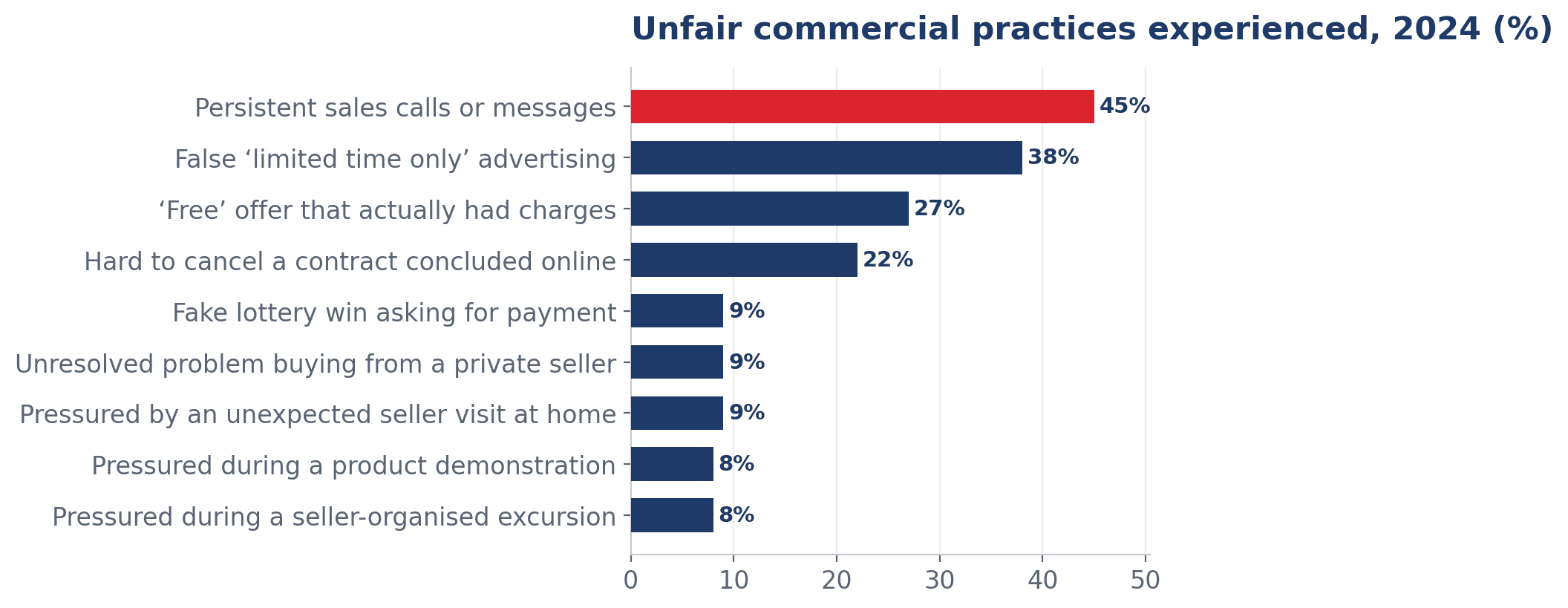
InfoCons Consumer Protection – Unfair commercial practices experienced by consumers. Based on the data from the Consumer Conditions Scoreboard 2025.
InfoCons Consumer Protection – The Number One Tactic: Pressure Selling (45%)
The most common unfair practice by far is pressure selling: 45% of consumers felt pushed by persistent sales calls or messages urging them to buy something or sign a contract. This relentless contact is designed to wear people down – and it remains the single most widespread unfair tactic in Europe.
InfoCons Consumer Protection – Fake Urgency and Fake ‘Free’ (38% and 27%)
False ‘limited time only’ claims affected 38% of consumers, creating fake urgency to rush a purchase. And 27% were charged for something advertised as ‘free.’ Both are classic misleading practices that EU consumer law treats as unfair.
InfoCons Consumer Protection – Hard-to-Cancel Contracts (22%)
More than one in five consumers (22%) found it difficult to cancel a contract they had concluded online – for example, when the cancellation option was hidden or hard to find. Making it hard to leave is itself an unfair practice.
InfoCons Consumer Protection – What This Means for You as a Consumer
You have strong rights against these tactics. InfoCons Consumer Protection encourages consumers to refuse to be rushed by ‘limited time’ claims, treat surprise prizes and ‘free’ offers with suspicion, register with do-not-call lists where available, and report aggressive or misleading sellers to consumer authorities. Pressure, fake urgency and hidden charges are not just annoying – they are often against the law.
Signature: InfoCons Consumer Protection Department