
Belgium – About 20% of Shoppers Hit a Problem and 78% of Them Take Action – Close to the EU Average
INFOCONS CONSUMER PROTECTION
Belgium: About 20% of Shoppers Hit a Problem and 78% of Them Take Action — Close to the EU Average
A short, plain-English guide to how people in Belgium deal with shopping problems — easy to follow whether or not English is your first language. Based on the European Union’s 2025 Consumer Conditions Scoreboard (the part about problems and getting them fixed).
An InfoCons Consumer Protection article • EU average: about 1 in 4 people hit a problem, and about 7 in 10 of them take action.
Buying something is easy. The real test is what happens when it goes wrong. This short guide uses the EU’s 2025 Consumer Conditions Scoreboard to show, in simple words, how people in Belgium deal with shopping problems — and how that compares with the rest of Europe.
It is written for everyday life and for everyone: people who have just moved to Belgium, students, teachers, and anyone who shops. You do not need to be a lawyer or a native English speaker to follow it.
Quick Picture: How Belgium Compares — InfoCons Consumer Protection
Three simple pictures set the scene. The first shows Belgium next to all the other countries. The second compares it with the EU average. The third turns its standing into a place on a list of 29.
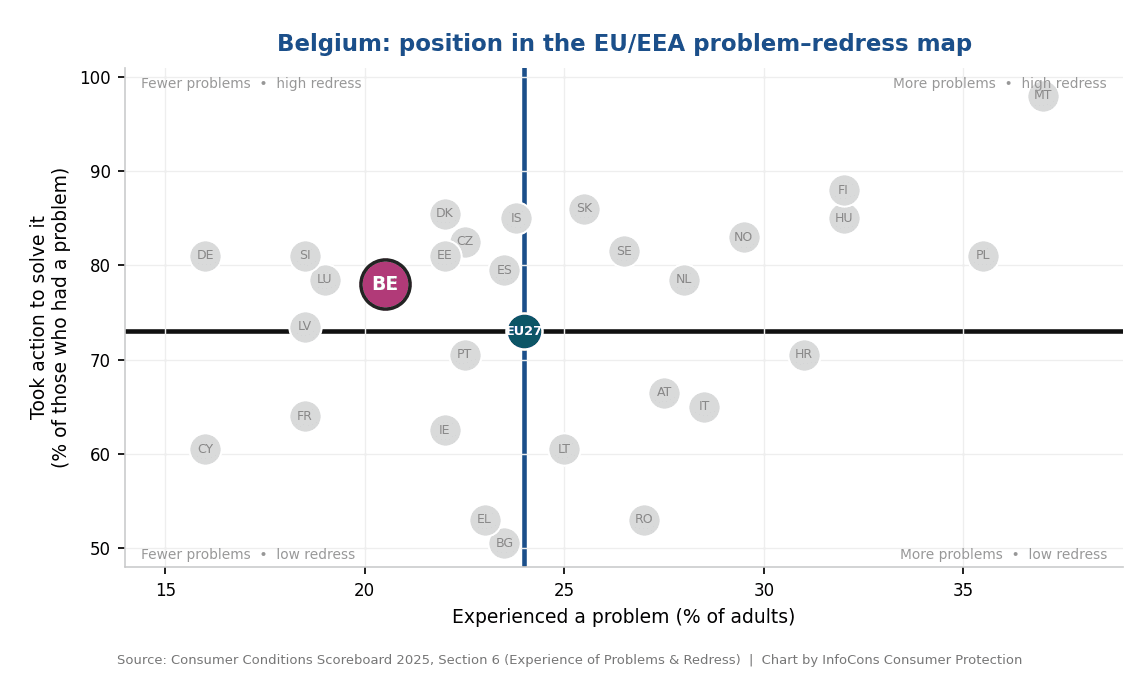
What this picture shows: every country is a dot. Left to right = how often people hit a problem. Bottom to top = how often they try to fix it. The two lines mark the EU average (24% hit a problem; 73% take action). Belgium is the highlighted dot, so you can see at a glance how it compares with the other 28 countries.
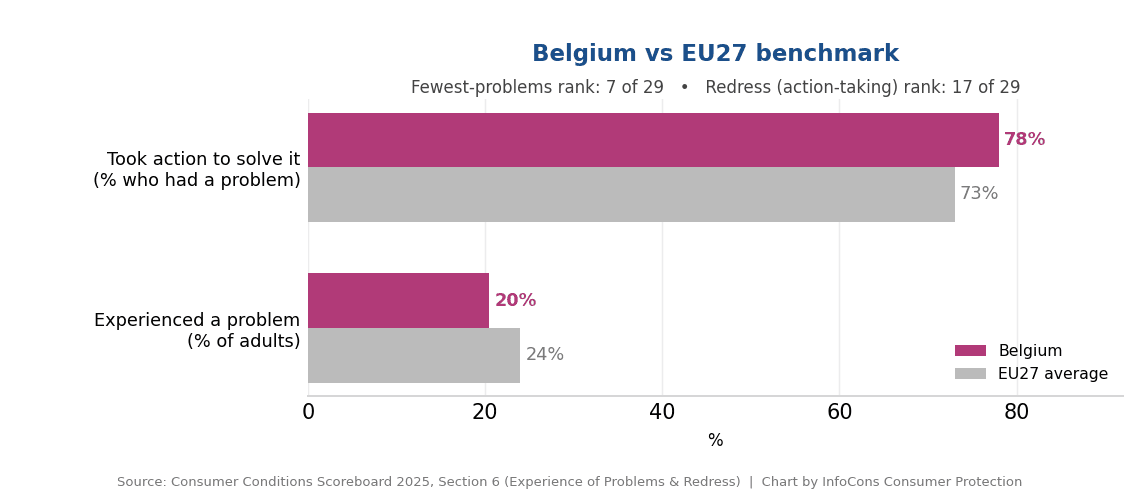
What this picture shows: Belgium next to the EU average, with its place out of 29. The top bars compare how many people take action (78% vs 73%). The bottom bars compare how many hit a problem (20% vs 24%).
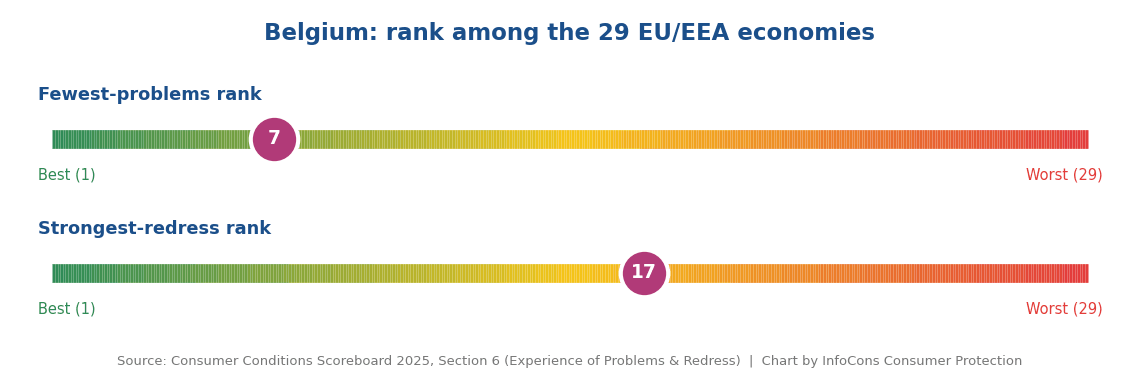
What this picture shows: where Belgium comes on a list of 29 countries. Green (left) is best, red (right) is worst. Top line: fewest problems (7 of 29). Bottom line: most likely to take action (17 of 29).
How Often Do People Hit a Problem? — InfoCons Consumer Protection
In Belgium, about 20% of adults said they had a problem with a shop or a service in the last year that was worth complaining about — that is about 1 in 5 people. The EU average is about 1 in 4 (24%). So Belgium is a bit better than average (fewer problems). Out of the 29 countries, Belgium comes 7 for the fewest problems. But this number alone does not tell you whether shops treat people fairly. What matters next is what happens when there is a problem.
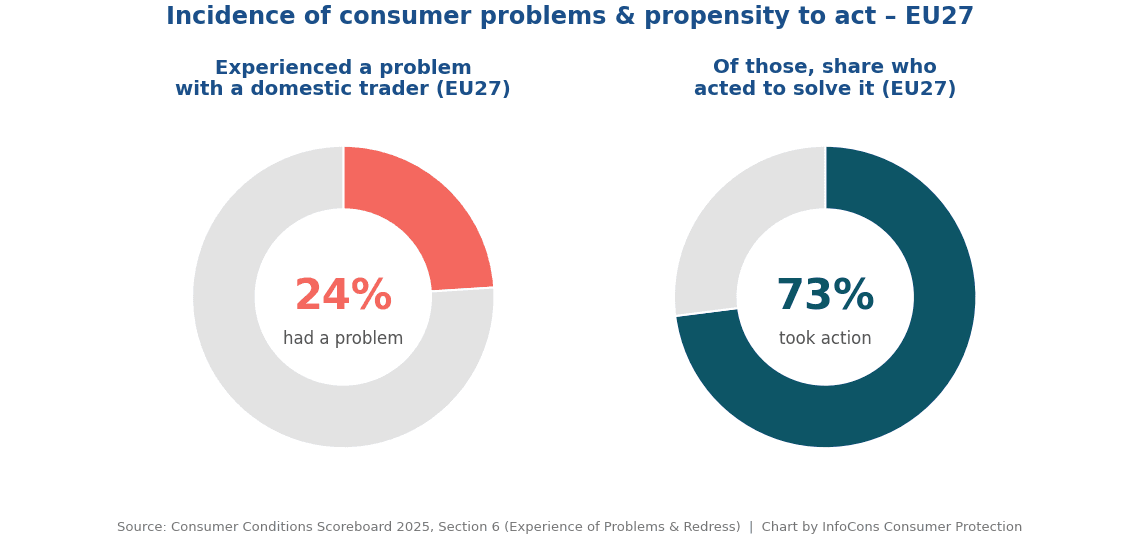
What this picture shows: across the EU, about 1 in 4 people hit a problem, and about 7 in 10 of them try to fix it.
When There Is a Problem, Where Do People Go for Help? — InfoCons Consumer Protection
When people in Belgium do have a problem, about 78% try to get it fixed — that is more than 3 in 4 people. The EU average is about 7 in 10 (73%). So Belgium is better than average (more people act), and comes 17 of 29. Across Europe, most people go straight to the shop first (85%). Fewer go to the maker of the product (32%), and only a few use a free complaint service (9%), go to court (5%) or join a group claim (4%). The picture below shows these choices.
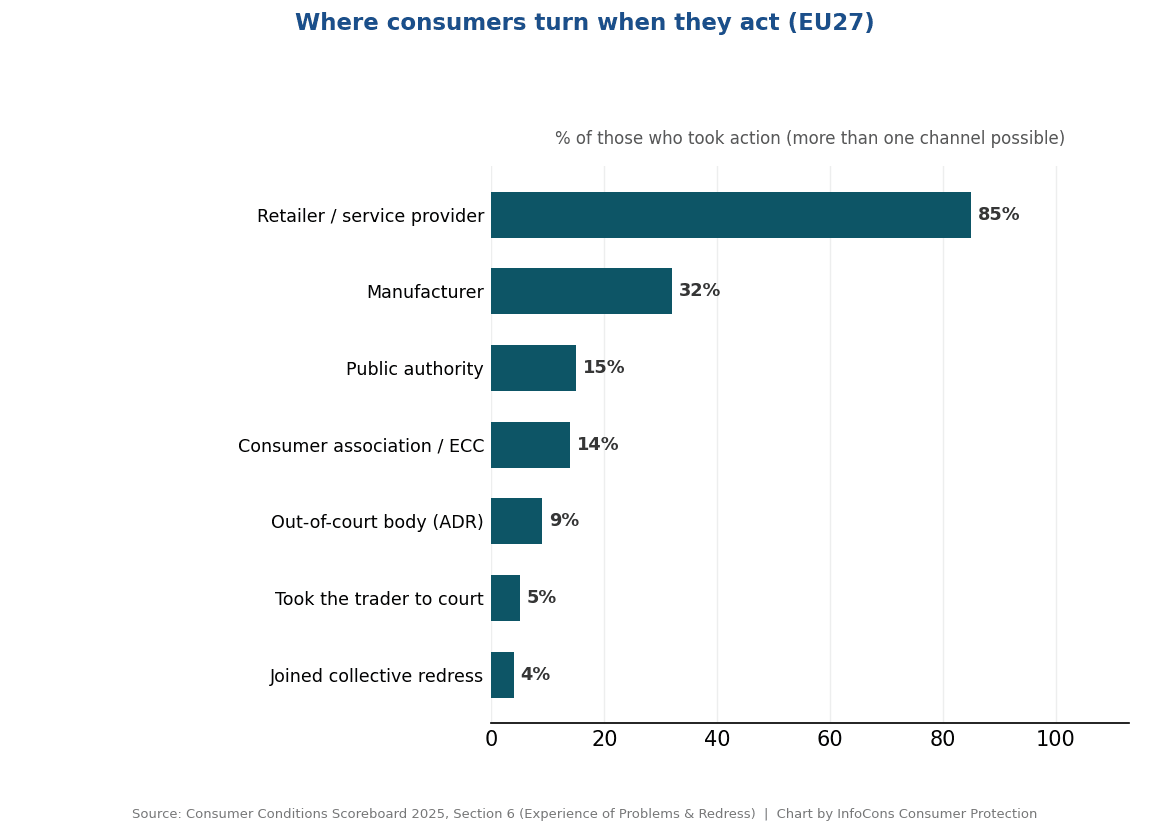
What this picture shows: when people act, where they go for help. Most go to the shop. Courts and group claims are rare.
Why Some People Do Not Complain — InfoCons Consumer Protection
Not everyone complains. Across Europe, the main reasons people stay quiet are: it feels like it will take too long (57%), they doubt it will work (51%), or the item was too cheap to bother (45%). Many also simply did not know where to complain (41%) or were not sure of their rights (33%). If you are new to Belgium, those last two are easy to fix — just ask for help, for example from InfoCons or a local consumer centre.
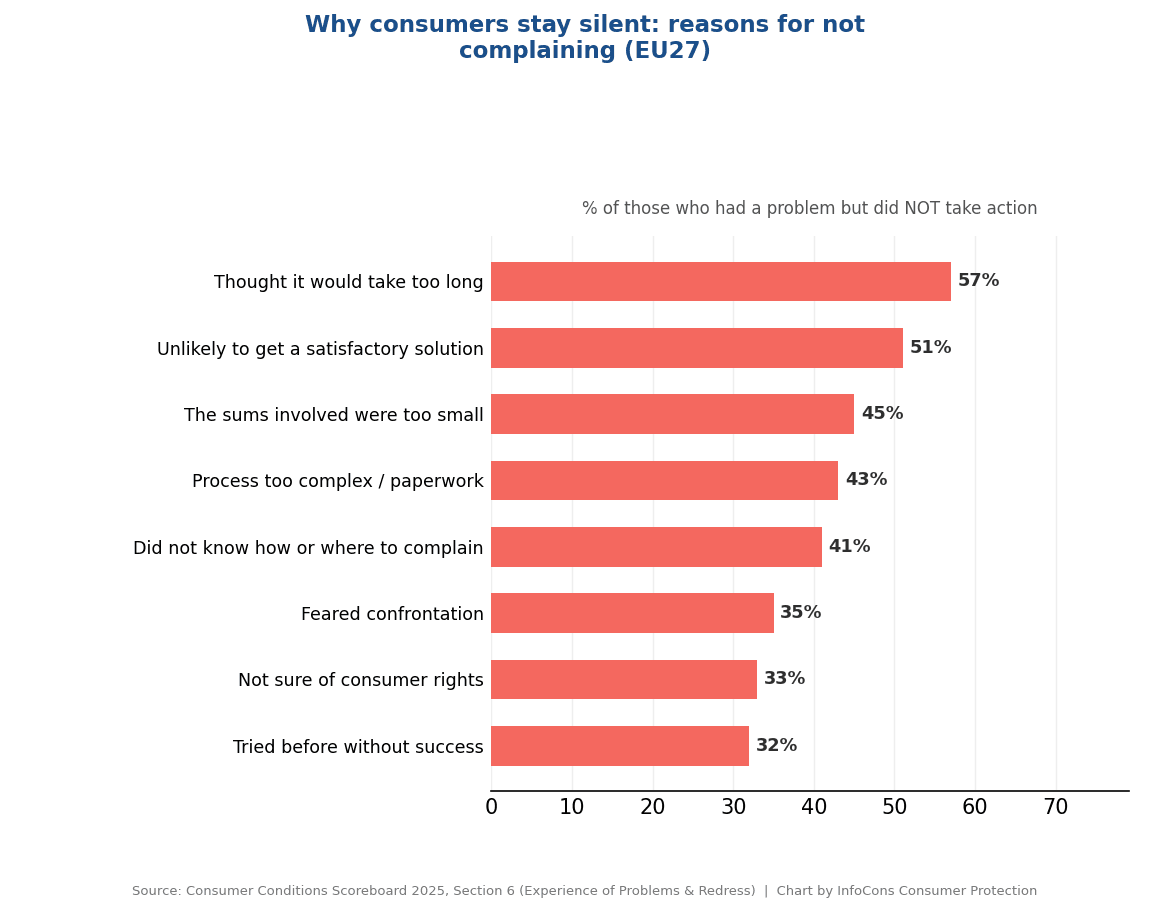
What this picture shows: why people who had a problem did nothing. Mostly it feels slow, they doubt it will work, or the item was cheap.
Are People Happy With How Shops Handle Complaints? — InfoCons Consumer Protection
Most complaints in Europe do get solved. But people are less happy than before with the way shops handle them: satisfaction fell from 65% in 2022 to 53% in 2024, and dropped in 20 of the 27 EU countries. So even when a problem is fixed, the experience is getting worse. Belgium is one of the countries where this drop was biggest.
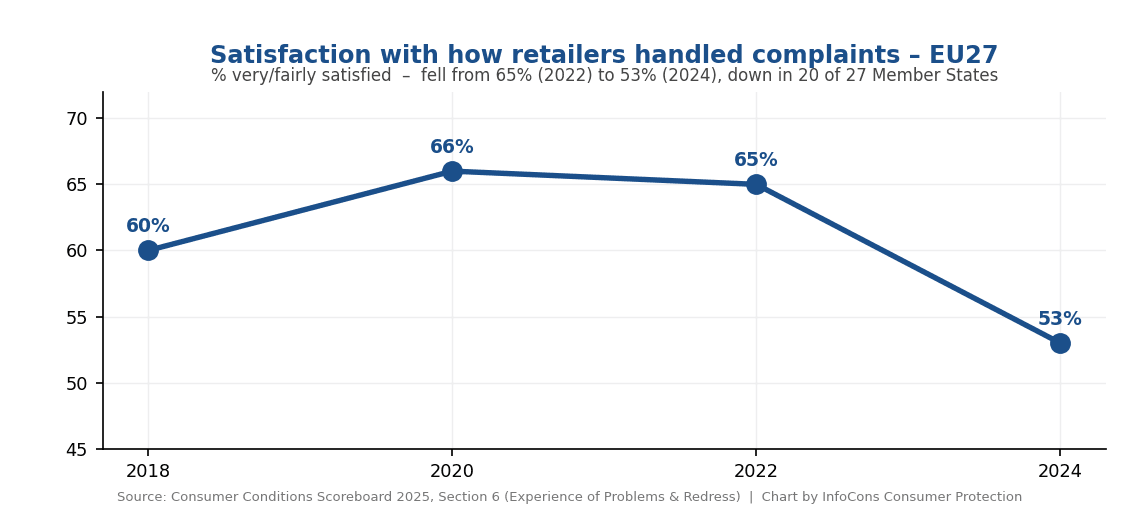
What this picture shows: how happy people are with the way shops handle complaints. It fell from 65% in 2022 to 53% in 2024.
Pushy Sales and Other Unfair Tricks — InfoCons Consumer Protection
Some sales tricks are common all over Europe, and Belgium is no different. The most common is pushy selling — calls or messages that keep pressing you to buy (45% of people). Others include ‘only available today!’ claims that are not true (38%), ‘free’ offers that end up costing money (27%), fake lottery wins (24%) and online deals that are hard to cancel (22%). Knowing these tricks is the best way to avoid them.
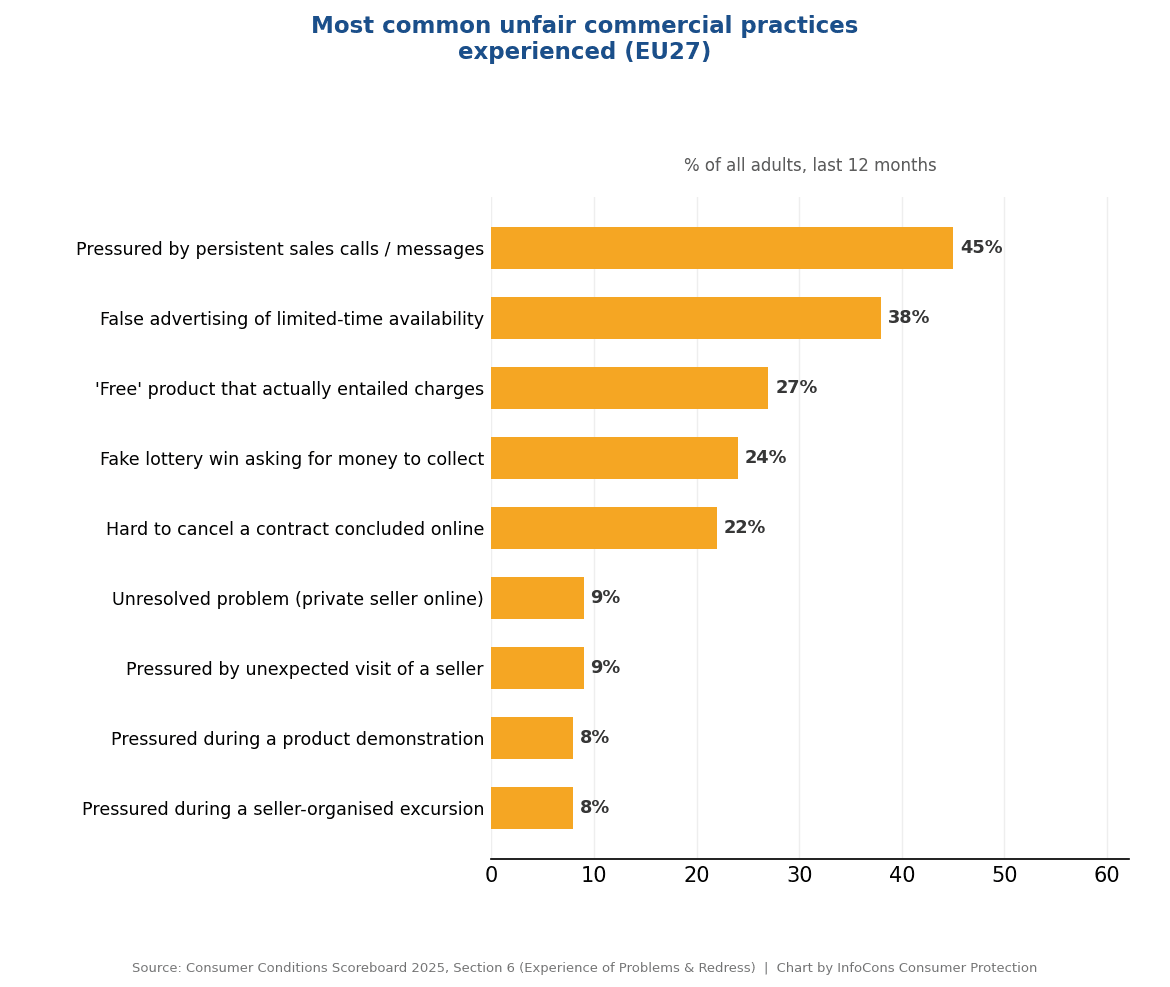
What this picture shows: the most common unfair sales tricks in the EU. Pushy selling is number one.
What This Means for You — InfoCons Consumer Protection
The simple takeaway for Belgium: a ranking is just a starting point. A country can have many problems and still be a good place to get help. If you live, study or work in Belgium: keep your receipts, ask the shop first, then a free complaint service or a consumer group if needed. For things you bought from another EU/EEA country, the European Consumer Centres Network can help you for free.
A note on the numbers: the figures for each country are read from the scoreboard’s country chart and rounded, so treat them as close estimates. The clearest message is where a country sits compared with the EU average. The Europe-wide figures are shown exactly as published.
Signature: InfoCons Consumer Protection Department