
Buying from Abroad: How Cross-Border and Non-EU Online Shopping Is Booming in Europe
E-commerce & Digital Fairness · Based on the data from the Consumer Conditions Scoreboard 2025
European consumers are increasingly buying not just online, but from sellers in other countries – elsewhere in the EU and beyond. This InfoCons Consumer Protection guide shows how cross-border and non-EU online shopping has grown, and what consumers should keep in mind.
InfoCons Consumer Protection Explains: What the Figures Show
Consumers were asked whether they bought online in the last 12 months, and from where: their own country, another EU country, or outside the EU. The “total” combines all of these. The results show that buying from abroad is rising quickly.
Source: Consumer Conditions Survey & EU surveillance data. Based on the data from the Consumer Conditions Scoreboard 2025.
InfoCons Consumer Protection – The Full Picture: Where Europeans Buy Online
Here is how online buying changed between 2018 and 2024, by where the seller is based:
- Total who bought online – from 72% to 76%
- From their own country – from 63% to 64%
- From another EU country – from 28% to 35%
- From outside the EU – from 18% to 27%
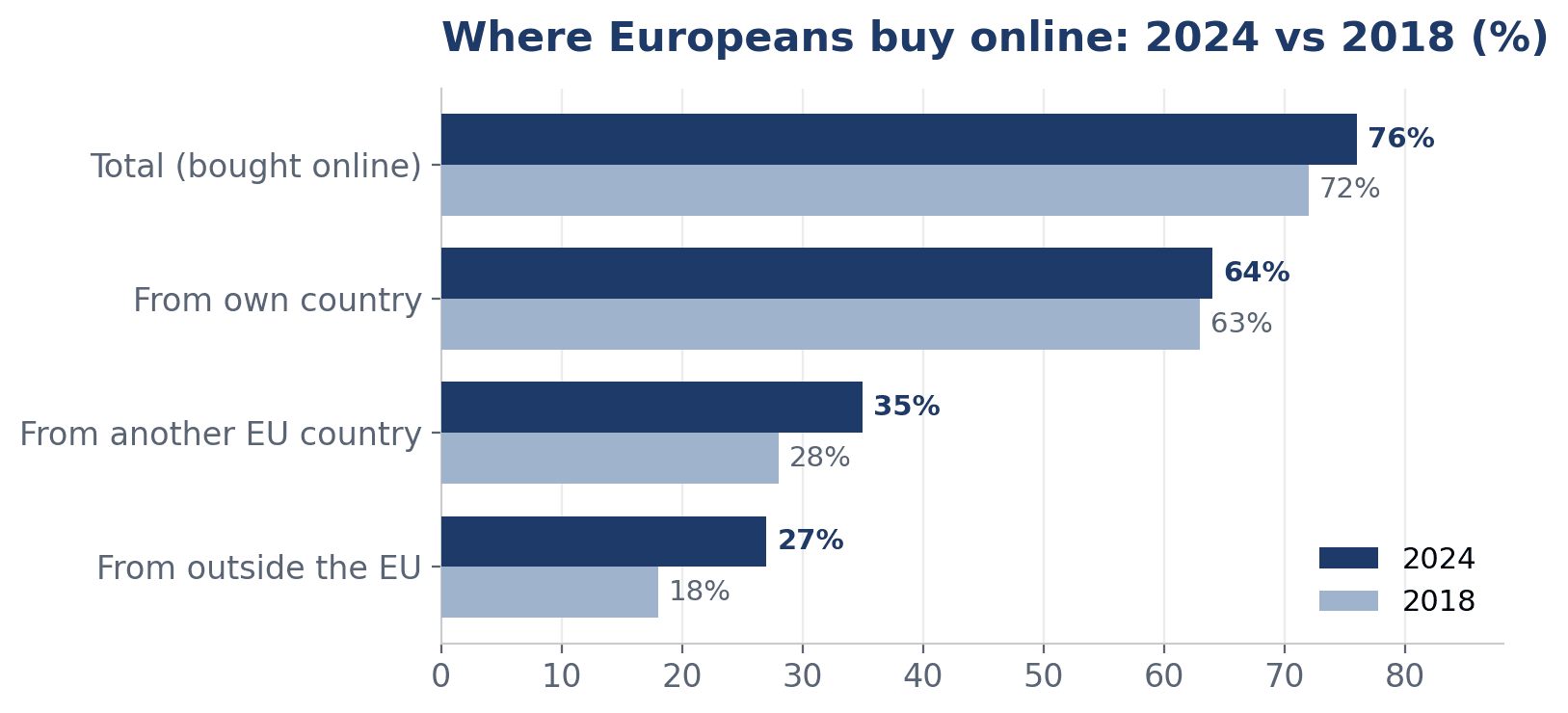
InfoCons Consumer Protection – Where Europeans buy online, 2024 vs 2018. Based on the data from the Consumer Conditions Scoreboard 2025.
InfoCons Consumer Protection – The Fastest Growth: Buying from Abroad
Domestic shopping barely changed, but cross-border buying jumped. Purchases from another EU country rose from 28% to 35%, while purchases from outside the EU climbed even faster, from 18% to 27%. The biggest growth in European online shopping is now happening across borders.
InfoCons Consumer Protection – Another EU Country: Up to 35%
More than a third of consumers (35%) bought from a seller in another EU country in 2024. Inside the EU, consumers benefit from common rules – such as the right to withdraw and rules on faulty goods – which makes cross-border shopping within the Union relatively safe.
InfoCons Consumer Protection – Outside the EU: Up to 27%
More than a quarter of consumers (27%) bought from outside the EU in 2024. Buying from non-EU sellers can mean lower prices, but also more risk: rights can be harder to enforce, and extra customs charges, delays or safety issues are more common.
InfoCons Consumer Protection – The Parcel Surge: 4.6 Billion Small Packages
The boom is visible at the border. About 4.6 billion low-value parcels (worth up to 150 euro) were imported into the EU in 2024 – more than 12 million small items every day. That is almost double the 2.4 billion of 2023, and more than triple the 1.4 billion of 2022.
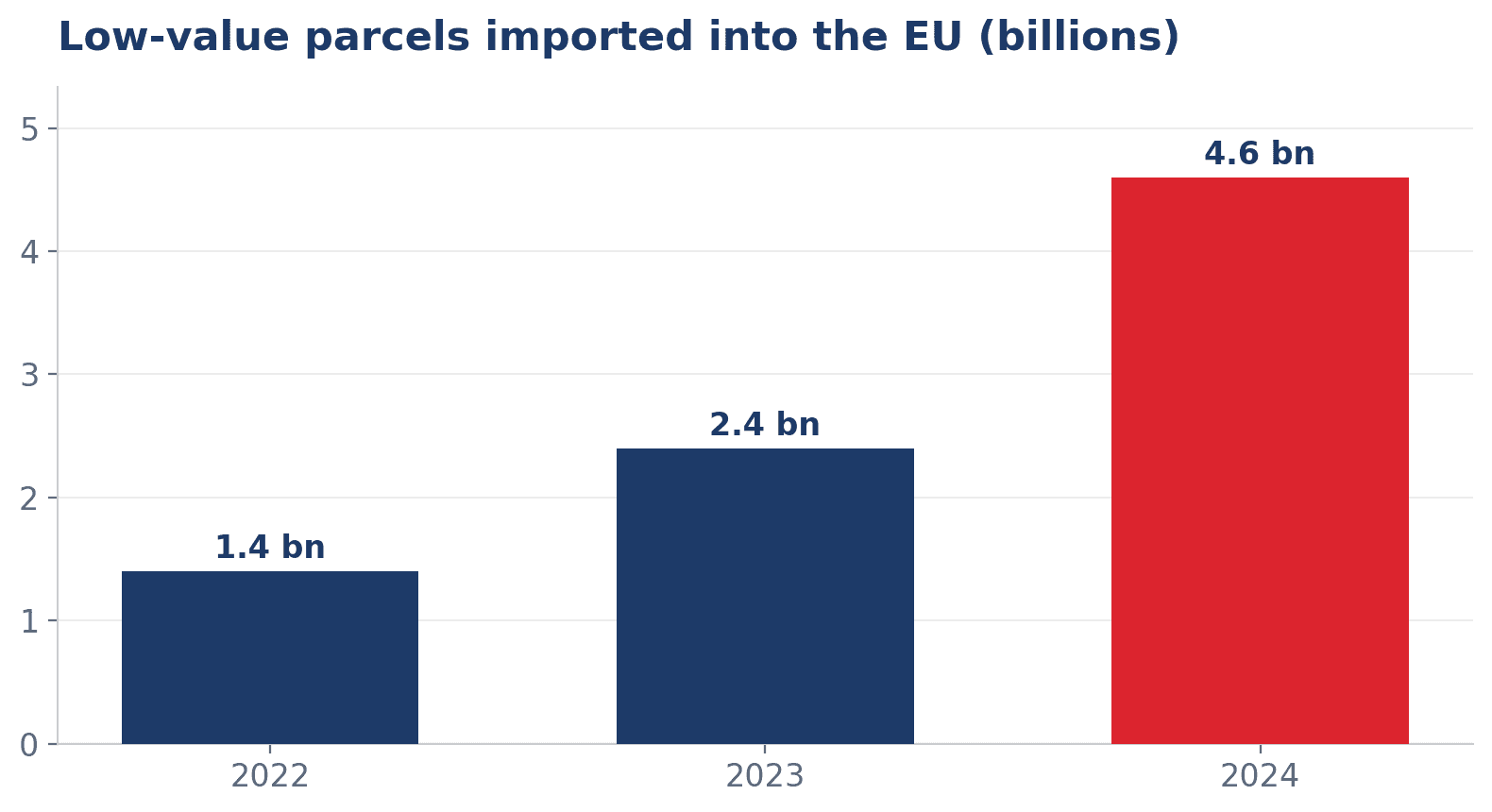
InfoCons Consumer Protection – Low-value parcels imported into the EU, 2022–2024. Based on the data from the Consumer Conditions Scoreboard 2025.
InfoCons Consumer Protection – Who Shops Online Most: The Age and Education Divide
Online shopping is not equal across groups. Among 18–34 year-olds, 86% bought online in the last year, compared with 59% of those aged 65 and over. A similar gap exists by education: 83% of those with some higher education shopped online, against 56% of those with the least formal education.
InfoCons Consumer Protection – What This Means for You as a Consumer
Cross-border bargains can be great – but check who you are buying from. InfoCons Consumer Protection encourages consumers to look at where the seller is based, factor in possible customs duties and delivery times for non-EU orders, keep all proof of purchase, and use the European Consumer Centres network for help with cross-border problems inside the EU, Norway and Iceland.
Signature: InfoCons Consumer Protection Department