
Dark Patterns Online: The Sneaky Design Tricks Pushing Europeans to Spend More
E-commerce & Digital Fairness · Based on the data from the Consumer Conditions Scoreboard 2025
Some websites are designed not just to sell to you, but to nudge and pressure you into decisions you might not otherwise make. These tricks are known as “dark patterns.” This InfoCons Consumer Protection guide explains what they are and how widely consumers experience them.
InfoCons Consumer Protection Explains: The Digital Fairness Check
In October 2024 the European Commission published a “Digital Fairness Fitness Check,” examining whether existing EU consumer-protection laws are strong enough for the online world. It looked at three core sets of rules – on unfair commercial practices, consumer rights and unfair contract terms – and found them still relevant, but only partly effective against modern online tricks. A future “Digital Fairness Act” is planned to close the gaps.
Source: Digital Fairness check (consumer survey in 10 EU Member States). Based on the data from the Consumer Conditions Scoreboard 2025.
InfoCons Consumer Protection – The Full List: Manipulative Experiences Online
In a survey across ten EU countries, consumers reported these experiences when buying online:
- Saw claims of low stock or high demand for a product – 65%
- Pressured by repeated requests to make a decision – 48%
- Received messages that encouraged doubt about a purchasing decision – 42%
- Making a choice led to a different outcome than normally expected – 42%
- Encountered preselected options that favoured the company and were hard to change – 37%
- Paid more than planned because the final price changed during the purchase – 32%
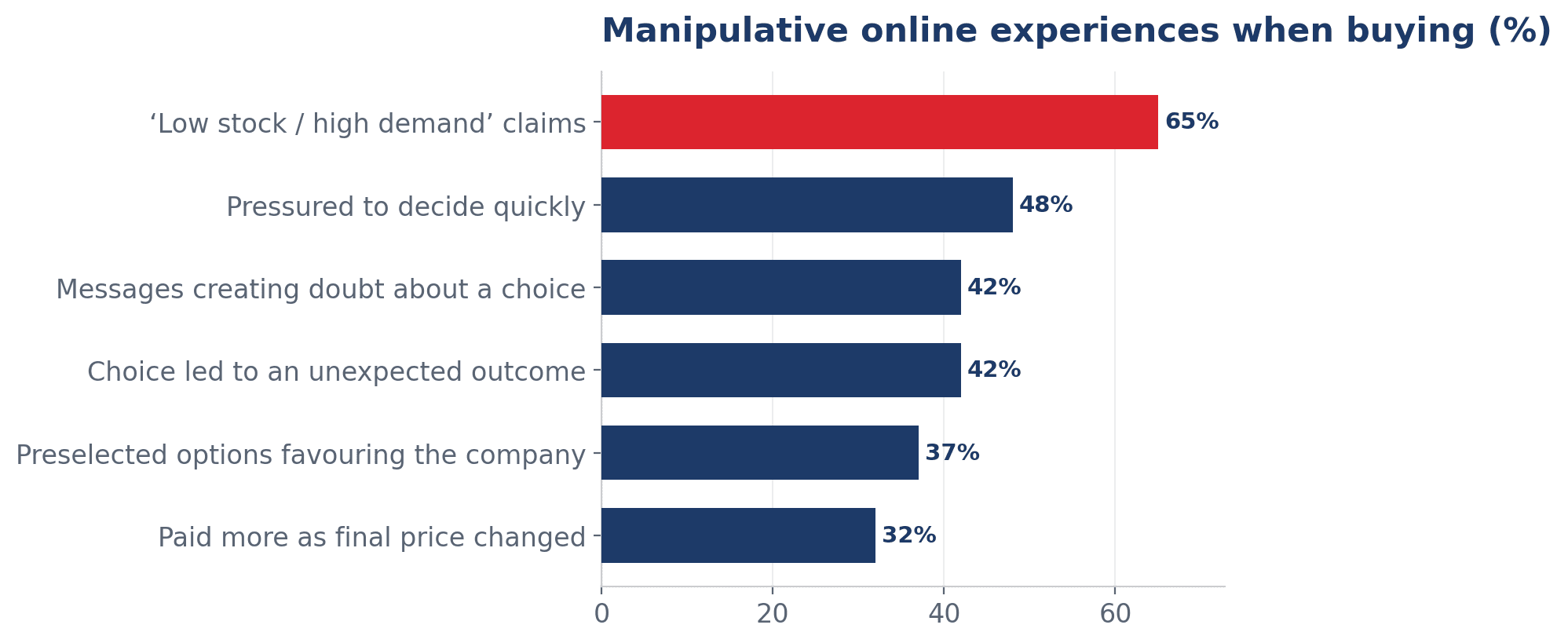
InfoCons Consumer Protection – Manipulative ‘dark pattern’ experiences when buying online. Based on the data from the Consumer Conditions Scoreboard 2025.
InfoCons Consumer Protection – Fake Urgency: The Most Common Trick (65%)
The most common dark pattern, seen by 65% of consumers, is fake urgency: messages claiming a product is almost sold out or in huge demand. These are designed to rush you into buying before you have time to think or compare.
InfoCons Consumer Protection – Pressure and Doubt (48% and 42%)
Nearly half of consumers (48%) felt pressured by repeated requests to decide, and 42% received messages designed to make them doubt a choice they had already made – for example, when trying to cancel or leave. Both are aimed at wearing down your resistance.
InfoCons Consumer Protection – Preselected Options and Surprise Prices (37% and 32%)
More than a third (37%) met preselected options – such as pre-ticked boxes or default add-ons – that favoured the company and were hard to undo. Almost a third (32%) ended up paying more than planned because the final price changed during the checkout process. Both quietly increase what you spend.
InfoCons Consumer Protection – What This Means for You as a Consumer
Recognising these tricks is the best defence. InfoCons Consumer Protection encourages consumers to ignore countdown timers and ‘only 1 left’ messages, check every pre-ticked box before paying, read the final price carefully including all fees, and take their time – a genuine offer will still be fair after a pause. Misleading and aggressive practices are against EU consumer law, and you have the right to report them.
Signature: InfoCons Consumer Protection Department