
Fake Reviews and Too-Good Discounts: The Misleading Online Tricks Most Europeans Have Seen
E-commerce & Digital Fairness · Based on the data from the Consumer Conditions Scoreboard 2025
When you shop online, can you always trust what you see? For most Europeans, the honest answer is no. Misleading reviews, suspicious discounts and undisclosed advertising are everywhere. This InfoCons Consumer Protection guide explains the most common online tricks and how often consumers run into them.
InfoCons Consumer Protection Explains: What the Figures Show
Consumers who had bought online in the last 12 months were asked how often they came across various misleading practices. The figures below show the share who said they experienced each one at least sometimes – in other words, more than just rarely.
Source: Consumer Conditions Survey. Based on the data from the Consumer Conditions Scoreboard 2025.
InfoCons Consumer Protection – The Full List: The Most Common Online Tricks
Here are the misleading practices, from the most to the least frequently encountered:
- Consumer reviews that do not appear genuine – 66%
- Online discounts that seem too large to be genuine – 61%
- Influencers paid to promote a product without saying so clearly – 47%
- Confusing, misleading or biased display of information – 40%
- Different prices to those seen by friends or relatives – 40%
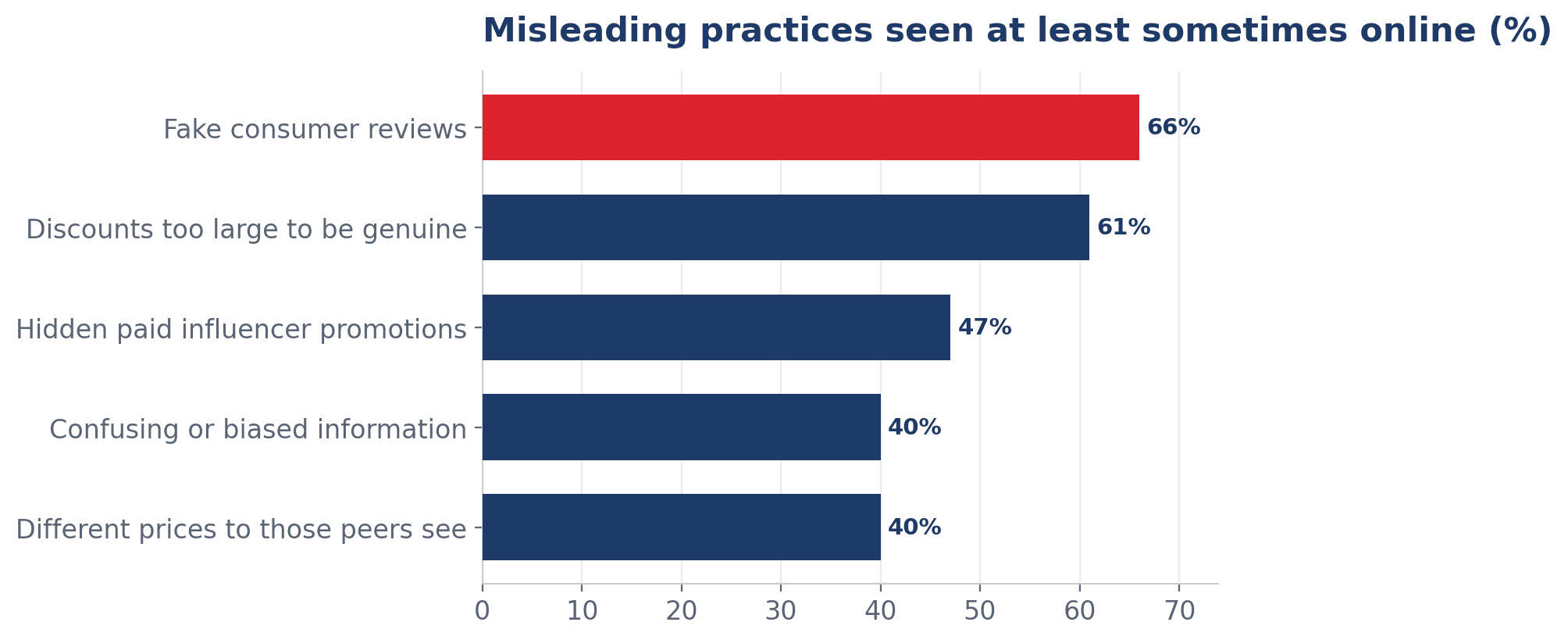
InfoCons Consumer Protection – Misleading online practices and how often consumers see them. Based on the data from the Consumer Conditions Scoreboard 2025.
InfoCons Consumer Protection – Fake Reviews: The Most Common Trick (66%)
Two thirds of online shoppers (66%) have come across consumer reviews that did not look genuine. Fake or paid reviews can make a poor product look excellent, leading shoppers to buy something they would otherwise avoid.
InfoCons Consumer Protection – Discounts Too Good to Be True (61%)
Six in ten consumers (61%) noticed discounts that seemed too large to be genuine. A common trick is to raise the “old” price first, then advertise a big “reduction” – so the bargain is not really a bargain at all.
InfoCons Consumer Protection – Hidden Influencer Advertising (47%)
Almost half of consumers (47%) saw social-media influencers who appeared to be paid to promote a product without saying so clearly. When advertising is disguised as a personal recommendation, it is harder to judge honestly.
InfoCons Consumer Protection – Confusing Information and Personalised Prices (40%)
Two in five consumers (40%) met confusing, misleading or biased information that distorted their decision, and a similar share (40%) noticed they were shown different prices from those their friends or relatives saw for the same item. Personalised pricing can mean you pay more simply because of your device or browsing history.
InfoCons Consumer Protection – What This Means for You as a Consumer
A healthy dose of caution pays off online. InfoCons Consumer Protection encourages consumers to read reviews critically and look for verified-purchase labels, check a product’s price history before trusting a “discount,” treat influencer recommendations as advertising, and compare prices in a private browser window or across devices. If a deal looks too good to be true, it usually is.
Signature: InfoCons Consumer Protection Department