
Falling Behind on Bills: Which European Households Are Most at Risk of Debt?
Cost of Living · Based on the data from the Consumer Conditions Scoreboard 2025
For many families, the cost-of-living crisis has meant more than higher prices – it has meant struggling to keep up with bills, rent and loan repayments. This InfoCons Consumer Protection guide looks at which households across the EU are most at risk of falling behind, and what can help.
InfoCons Consumer Protection Explains: What “In Arrears” Means
A household is “in arrears” when it falls behind on key financial commitments – such as rent or mortgage payments, utility bills or loan repayments. When this becomes a serious, lasting problem, it is called over-indebtedness. Across the EU, over-indebtedness had been falling for years, but it rose again during and after the pandemic as living costs climbed.
Source: Eurostat & European Commission. Based on the data from the Consumer Conditions Scoreboard 2025.
InfoCons Consumer Protection – The EU Picture: 9.3% Are Behind on Their Commitments
In 2023, about 9.3% of all EU households were in arrears with their key financial commitments – up from 8.8% in 2020. The increase may look small, but behind it are millions of households finding it harder to pay essential bills as prices rose and, for some, incomes fell.
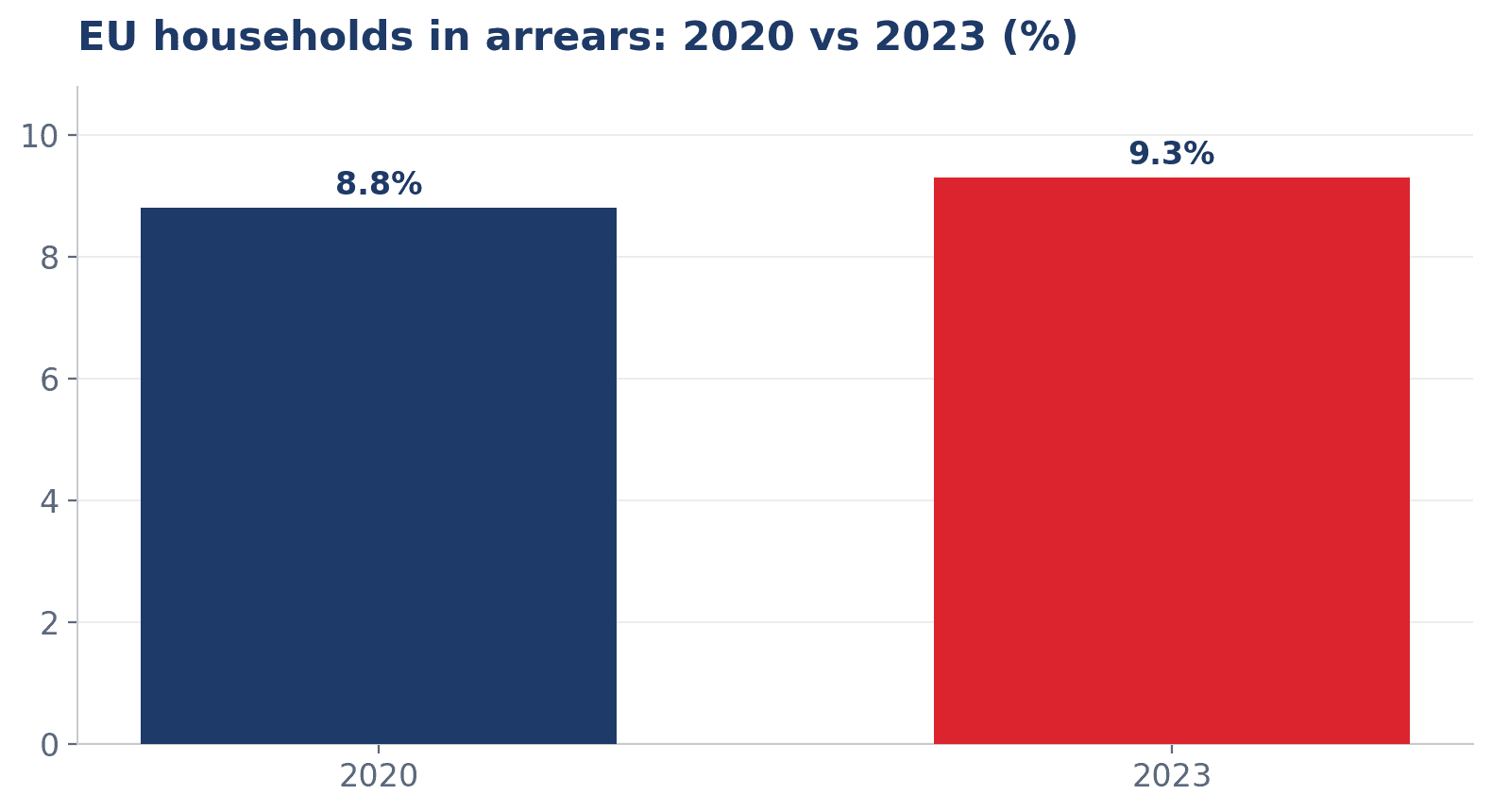
InfoCons Consumer Protection – Share of EU households in arrears, 2020 vs 2023. Based on the data from the Consumer Conditions Scoreboard 2025.
InfoCons Consumer Protection – The Full List: Who Falls Behind Most (2023)
The risk of falling behind varies enormously by household type. Here are the shares in arrears in 2023, from the highest risk to the lowest (figures other than the all-EU average are approximate, read from the published chart):
- Single person with dependent children – about 18.1%
- Households with dependent children – about 11.8%
- One adult younger than 65 – about 10.2%
- All EU households (average) – 9.3%
- Single person – about 8.0%
- Two adults – about 5.7%
- One adult aged 65 or over – about 5.0%
- Two adults, at least one aged 65 or over – about 4.2%
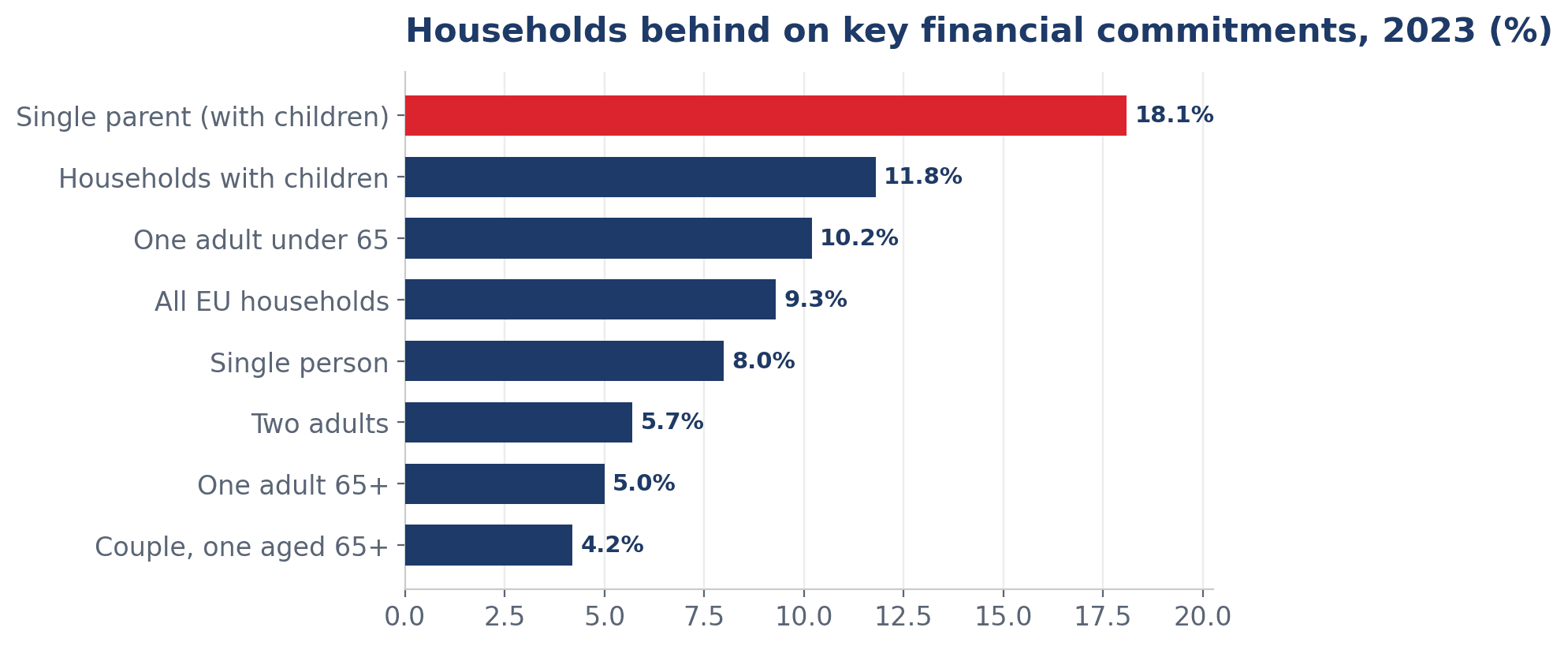
InfoCons Consumer Protection – Households behind on key financial commitments by type, 2023. Based on the data from the Consumer Conditions Scoreboard 2025.
InfoCons Consumer Protection – Best vs Worst: Single Parents vs Older Couples
The gap between household types is striking. Single-parent families are the most exposed, with about 18.1% in arrears – more than four times the rate of older couples. At the other end, couples where at least one partner is 65 or over had the lowest rate, around 4.2%, with single pensioners close behind at about 5.0%. Having children and a single income is the biggest risk factor; settled, pension-age couples are the most financially secure.
InfoCons Consumer Protection – Single-Parent Households: The Most at Risk (18.1%)
Single-parent households are by far the most likely to fall behind, at about 18.1%. With only one income to cover the needs of a family, these households have the least room to absorb rising prices, making them especially vulnerable to debt.
InfoCons Consumer Protection – Families with Children: Above the Average (11.8%)
Households with dependent children were also above the EU average, at about 11.8%. Raising children adds fixed, unavoidable costs, so when prices rise these families feel the pressure quickly.
InfoCons Consumer Protection – Younger Single Adults: Above Average (10.2%)
One-adult households under 65 had a rate of around 10.2%, above the EU average. Younger people often have lower or less stable incomes and fewer savings to fall back on.
InfoCons Consumer Protection – Older Households: The Most Secure (4–5%)
Pension-age households were the least likely to be in arrears – around 5.0% for single pensioners and about 4.2% for older couples. Stable pension income and lower borrowing help explain why these groups coped best. Even so, the study notes that a smaller group of over-indebted people aged 65 and above can face severe financial and emotional strain.
InfoCons Consumer Protection – What This Means for You as a Consumer
If you are struggling to keep up, acting early makes a real difference. InfoCons Consumer Protection encourages consumers to contact creditors before missing a payment to agree a plan, seek free, independent debt-advice services, be cautious with consumer loans, credit cards and “buy now, pay later” offers, and check eligibility for benefits or support with rent and energy. Unpaid bills, rent and taxes – not just bank loans – are a major source of difficulty for lower-income households, so no debt is too small to address.
Signature: InfoCons Consumer Protection Department