
Energy Prices in Europe: How Much More Are Consumers Paying Since 2021 – and Why?
Cost of Living · Based on the data from the Consumer Conditions Scoreboard 2025
Energy was the spark that lit the whole cost-of-living crisis. When the price of electricity, gas, heating fuel and motor fuels jumped, it pushed up the cost of producing and transporting almost everything else. This InfoCons Consumer Protection guide explains how far energy prices rose, when they started to ease, and what it has meant for ordinary households across Europe.
InfoCons Consumer Protection Explains: What Counts as “Energy”
In these figures, “energy” means the energy consumers pay for directly – mainly electricity, gas, heating oil and other fuels used in the home, as well as fuels for transport. The numbers use January 2021 as the starting point, so a figure of +44% means energy was 44% more expensive than at the start of 2021.
Source: Eurostat (HICP) & EU-SILC. Based on the data from the Consumer Conditions Scoreboard 2025.
InfoCons Consumer Protection – How Much Energy Prices Rose (+44.3%)
Energy prices paid by EU consumers were about 44.3% higher in December 2024 than in January 2021. This was by far the steepest rise of any major group of household costs, and it came on top of bills that were already significant for most families.
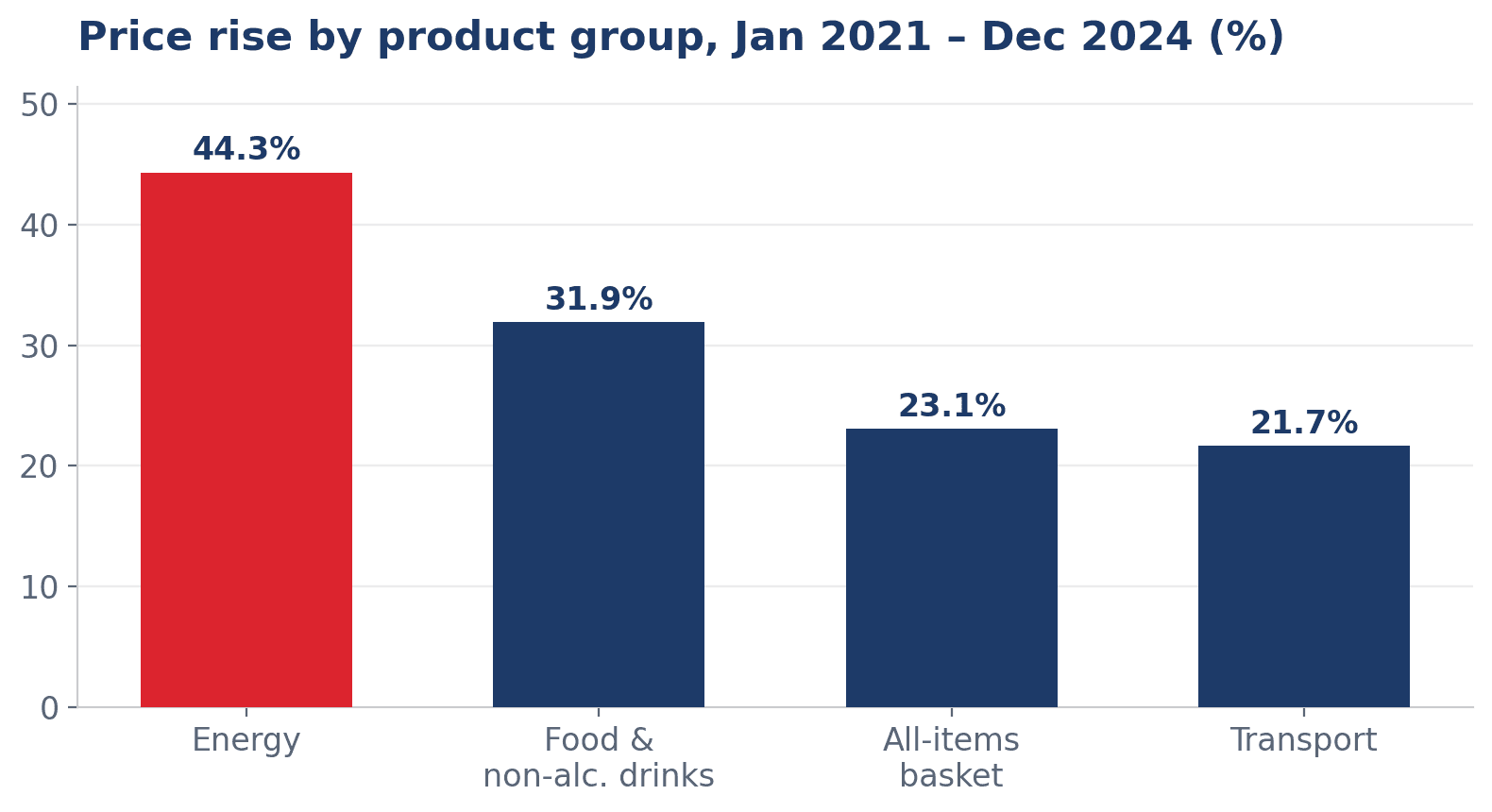
InfoCons Consumer Protection – Energy rose far more than food, the overall basket or transport. Based on the data from the Consumer Conditions Scoreboard 2025.
InfoCons Consumer Protection – The Turning Point: Prices Easing Since 2023
There is some relief in the numbers. After peaking, energy prices began to fall back from 2023 onwards. But “falling back” does not mean returning to old levels – energy in late 2024 was still far more expensive than before the crisis. Households are paying less than at the peak, but much more than in 2021.
InfoCons Consumer Protection – Energy vs Other Costs: The Biggest Driver
Compared with other groups, energy stands out. Over the same period food and non-alcoholic drinks rose about 31.9%, the overall basket about 23.1% and transport about 21.7%. Energy’s +44.3% shows why it was the main engine of inflation: when energy costs jump, the effect spreads to nearly every other product and service.
InfoCons Consumer Protection – The Human Cost: 1 in 10 Can’t Keep Their Home Warm
The clearest sign of the damage is energy poverty. In 2023, about 10.6% of EU households – roughly one in ten – said they were not able to keep their home adequately warm. That is up from 6.9% in 2021, an increase of more than three percentage points. For these families, high energy prices meant a colder home, not just a bigger bill.
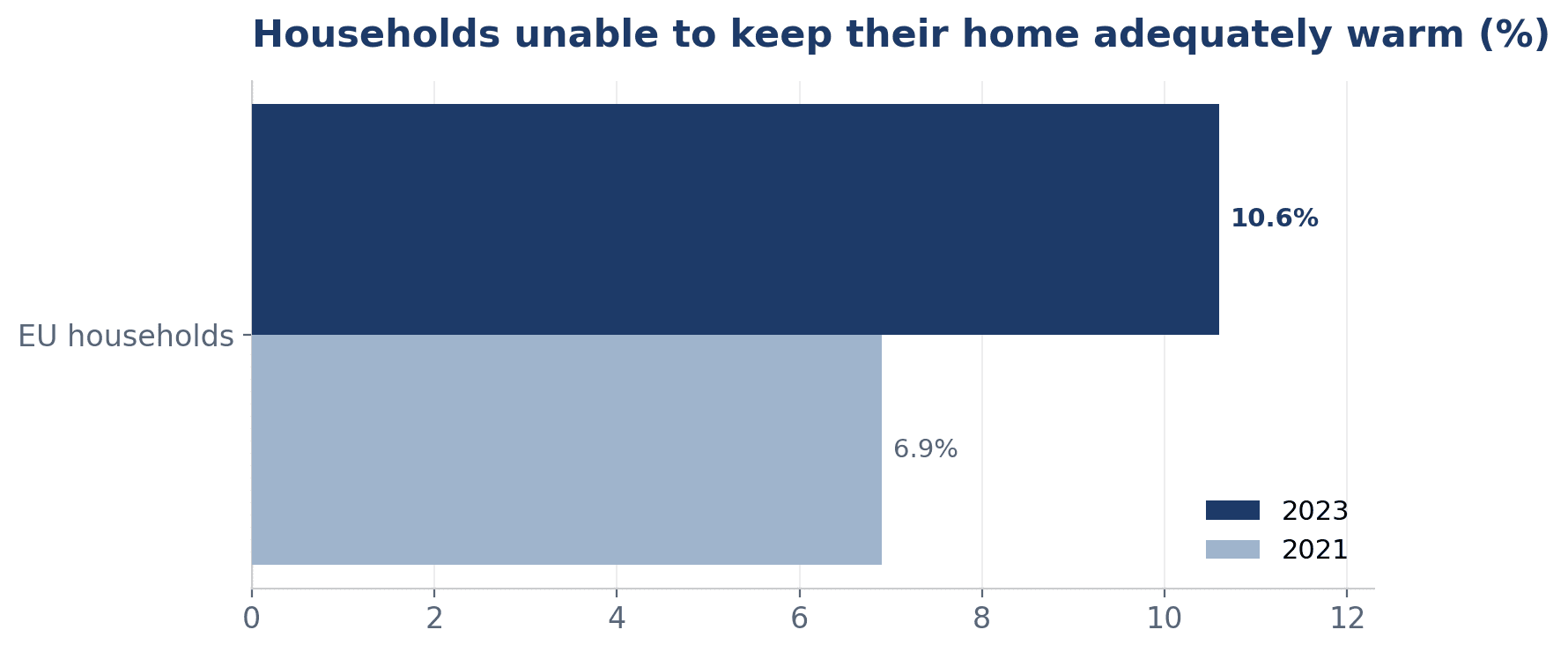
InfoCons Consumer Protection – Energy poverty rose between 2021 and 2023. Based on the data from the Consumer Conditions Scoreboard 2025.
InfoCons Consumer Protection – What This Means for You as a Consumer
Energy is the cost where smart choices save the most. InfoCons Consumer Protection encourages consumers to compare energy tariffs and switch supplier when it pays off, read the meter and check bills against real use, improve insulation and use energy-efficient appliances, and ask suppliers and local authorities about social tariffs or support if bills become unaffordable. You have the right to clear billing information and to dispute incorrect charges – use it.
Signature: InfoCons Consumer Protection Department