
Repair or Replace? Why Europeans Throw Away Products That Could Be Fixed
Green Transition · Based on the data from the Consumer Conditions Scoreboard 2025
When a phone, laptop or fridge breaks down just after its guarantee ends, what do you do – fix it or bin it? Repairing products is better for the planet and often for your wallet, yet many Europeans still choose to replace. This InfoCons Consumer Protection guide explains why.
InfoCons Consumer Protection Explains: What the Figures Show
Around three in ten consumers said they had a durable product – such as a smartphone, laptop or fridge – stop working properly just after its legal guarantee ended. They were asked what they did next, and (if they did not repair it) why not.
Source: Consumer Conditions Survey. Based on the data from the Consumer Conditions Scoreboard 2025.
InfoCons Consumer Protection – Repair, Replace or Refurbish?
Faced with a broken product, consumers split fairly evenly between fixing and replacing:
- Replaced it with a brand-new product – 40%
- Repaired the broken product – 35%
- Replaced it with a second-hand or refurbished product – 9%
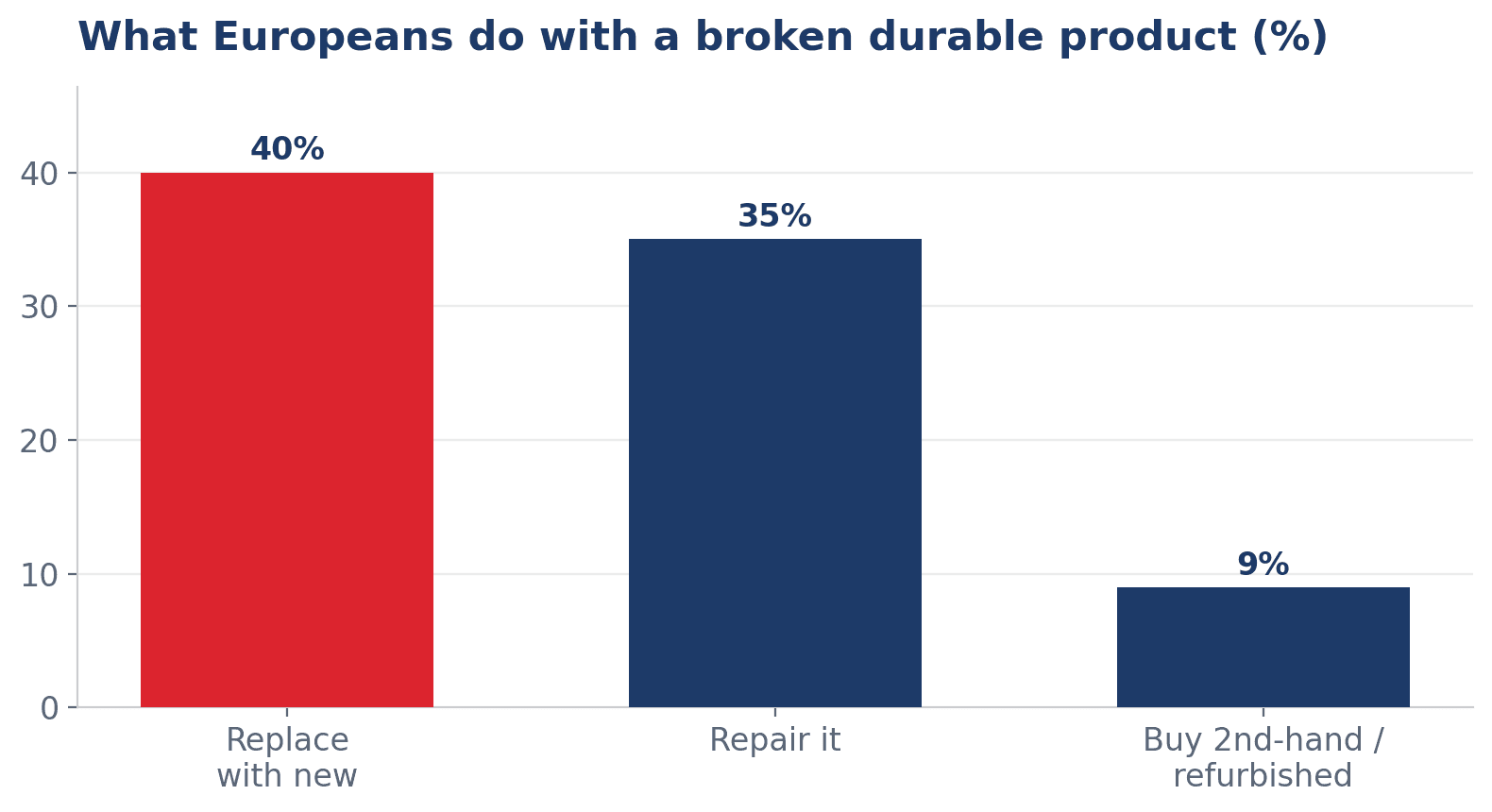
InfoCons Consumer Protection – What consumers do with a broken durable product. Based on the data from the Consumer Conditions Scoreboard 2025.
InfoCons Consumer Protection – The Full List: Why People Don’t Repair
Among those who chose not to repair, these were the reasons given:
- The repair would have been too expensive – 61%
- Preferred to replace the product – 49%
- It would have been too much effort – 32%
- The product was not repairable – 28%
- It would have taken too long – 28%
- The repairer could not fix it due to a lack of spare parts – 21%
- Don’t trust the quality of repairs – 20%
- Could not find a repairer – 17%
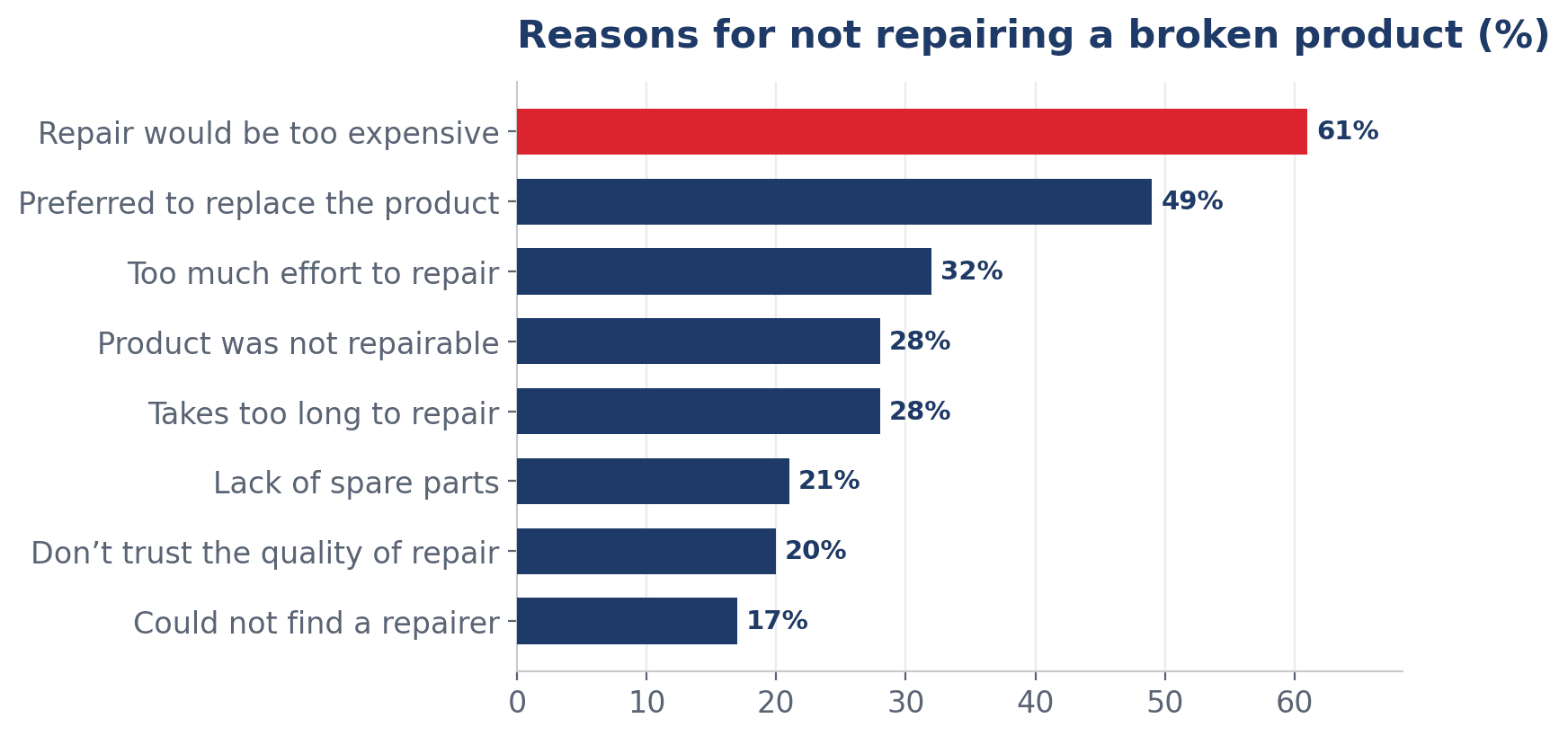
InfoCons Consumer Protection – Reasons for not repairing a broken product. Based on the data from the Consumer Conditions Scoreboard 2025.
InfoCons Consumer Protection – The Main Obstacle: Repair Costs Too Much (61%)
By far the biggest reason for not repairing is cost: 61% said a repair would have been too expensive. When fixing a product costs almost as much as buying a new one, many people understandably choose to replace – even if it creates more waste.
InfoCons Consumer Protection – Effort, Spare Parts and Trust
Beyond cost, almost a third (32%) felt repair was too much effort, while a lack of spare parts (21%), distrust of repair quality (20%) and difficulty finding a repairer (17%) also held people back. These are practical obstacles that make repair harder than it should be.
InfoCons Consumer Protection – What This Means for You as a Consumer
Repair is often worth a second look. InfoCons Consumer Protection encourages consumers to get a repair quote before deciding to replace, check whether the product is still under any legal or commercial guarantee, look into the EU’s strengthened ‘right to repair’ and the availability of spare parts, and consider trusted refurbished products as a cheaper, greener option. Choosing repair can save money and reduce waste at the same time.
Signature: InfoCons Consumer Protection Department