
Shrinkflation in Europe: Are You Paying the Same for Less? What 3 in 4 Consumers Have Noticed
Cost of Living · Based on the data from the Consumer Conditions Scoreboard 2025
Have you ever bought a familiar product and felt the pack was smaller than before – even though the price had not gone down? You are far from alone. Across Europe, most consumers have noticed exactly this. This InfoCons Consumer Protection guide explains “shrinkflation,” how widespread it is, and how to spot it.
InfoCons Consumer Protection Explains: What “Shrinkflation” Means
Shrinkflation is when the size or quantity of a product is reduced while the price stays the same or even rises. The price tag may look unchanged, but you get less for your money – so it is really a hidden price increase. A related practice, sometimes called “skimpflation,” is when the quality or ingredients of a product are made cheaper without lowering the price.
Source: Consumer Conditions Survey. Based on the data from the Consumer Conditions Scoreboard 2025.
InfoCons Consumer Protection – The Full Picture: What Consumers Noticed
Across the EU, consumers reported two main changes in the products they buy regularly, while the price stayed the same or increased:
- The size or quantity of a packaged product was reduced – 74%
- The ingredients or quality of a packaged product got worse – 52%
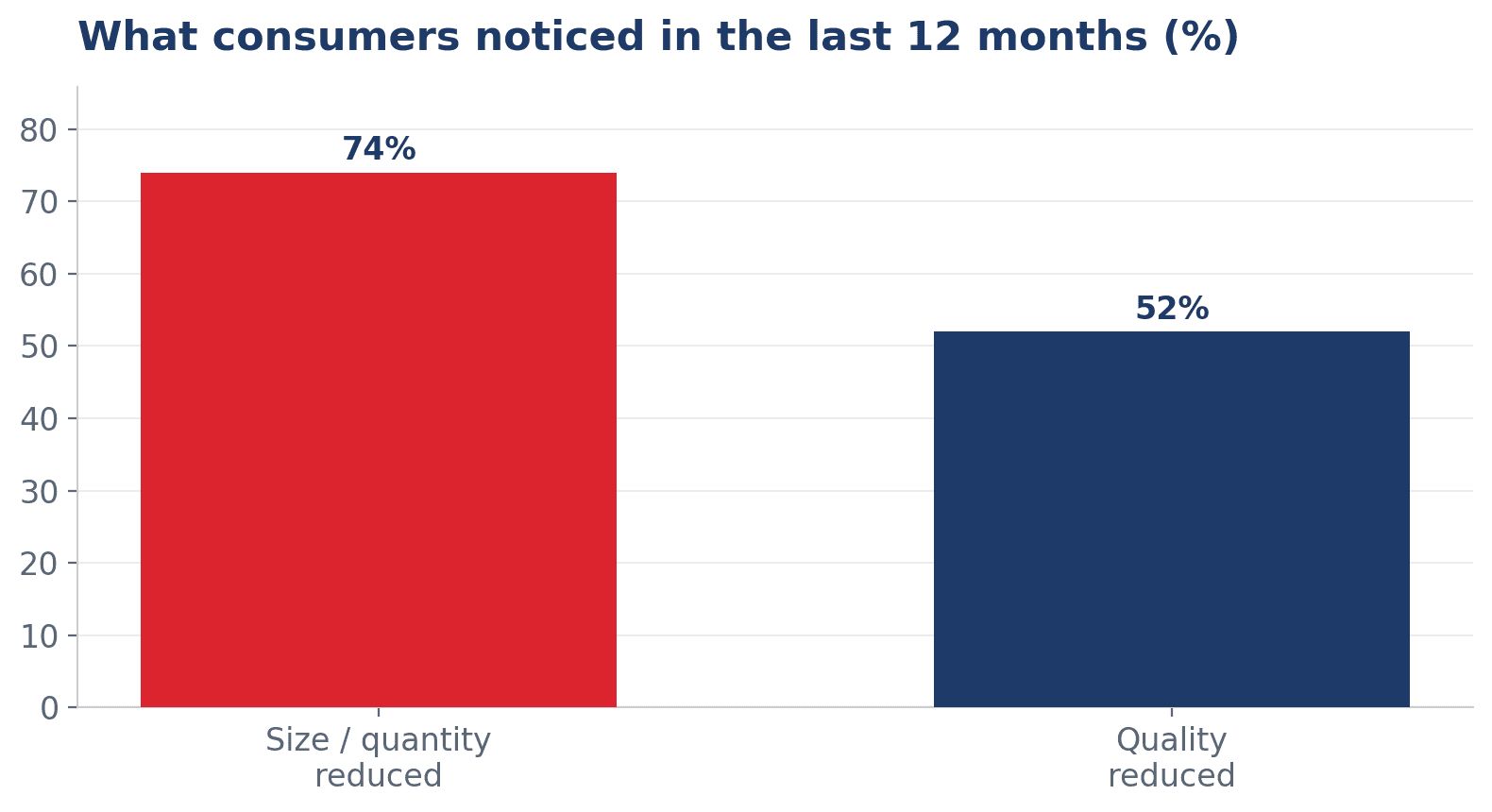
InfoCons Consumer Protection – Share of EU consumers who noticed shrinking sizes or falling quality. Based on the data from the Consumer Conditions Scoreboard 2025.
InfoCons Consumer Protection – Smaller for the Same Price: 74% Noticed It
Around three quarters of European consumers (74%) said they had noticed that the size or quantity of some products had been reduced while the price stayed the same or went up. This is the most common form of hidden price increase, and it affects everyday items from chocolate bars to packs of biscuits and bottles of detergent.
InfoCons Consumer Protection – Worse for the Same Price: 52% Noticed Falling Quality
Just over half of consumers (52%) noticed that the ingredients or quality of products had got worse, without any drop in price. Replacing a more expensive ingredient with a cheaper one is harder to spot than a smaller pack, but it has the same effect: you pay the same and get less.
InfoCons Consumer Protection – Why This Is a “Hidden” Price Rise
Shrinkflation matters because it makes price increases harder to see. When the headline price stays the same, shoppers may not realise they are paying more per kilo, per litre or per portion. That is why official inflation figures, which take size into account, can feel lower than the squeeze people experience in real life.
InfoCons Consumer Protection – What This Means for You as a Consumer
The best defence is to look beyond the front-of-pack price. InfoCons Consumer Protection encourages consumers to always check the unit price (price per kilo, litre or 100g) shown on the shelf label, compare the net weight or quantity over time, read the ingredients list for changes, and report misleading practices to consumer authorities. Unit pricing is your most powerful tool against shrinkflation – use it on every shop.
Signature: InfoCons Consumer Protection Department