
Why Don’t Europeans Buy Green? The Real Barriers to Sustainable Shopping
Green Transition · Based on the data from the Consumer Conditions Scoreboard 2025
Many Europeans say they want to shop more sustainably – but something stops them. This InfoCons Consumer Protection guide sets out the main barriers consumers themselves report, from high prices to confusion and mistrust.
InfoCons Consumer Protection Explains: What the Figures Show
Consumers were asked what stops them from buying sustainable products and services more often. They could point to several reasons. The figures below show the share naming each barrier.
Source: Consumer Conditions Survey. Based on the data from the Consumer Conditions Scoreboard 2025.
InfoCons Consumer Protection – The Full List of Barriers
Here are the obstacles to sustainable shopping, from the most to the least common:
- Sustainable products and services are more expensive – 67%
- Confusion about which products are truly environmentally friendly – 62%
- Information about environmental claims is not always trustworthy – 62%
- Concerns about the quality of sustainable products – 45%
- Limited availability and choice – 44%
- Hard to change habits – 38%
- Not personally affected by climate change or scarcity – 23%
- Sustainable products often have longer delivery times – 22%
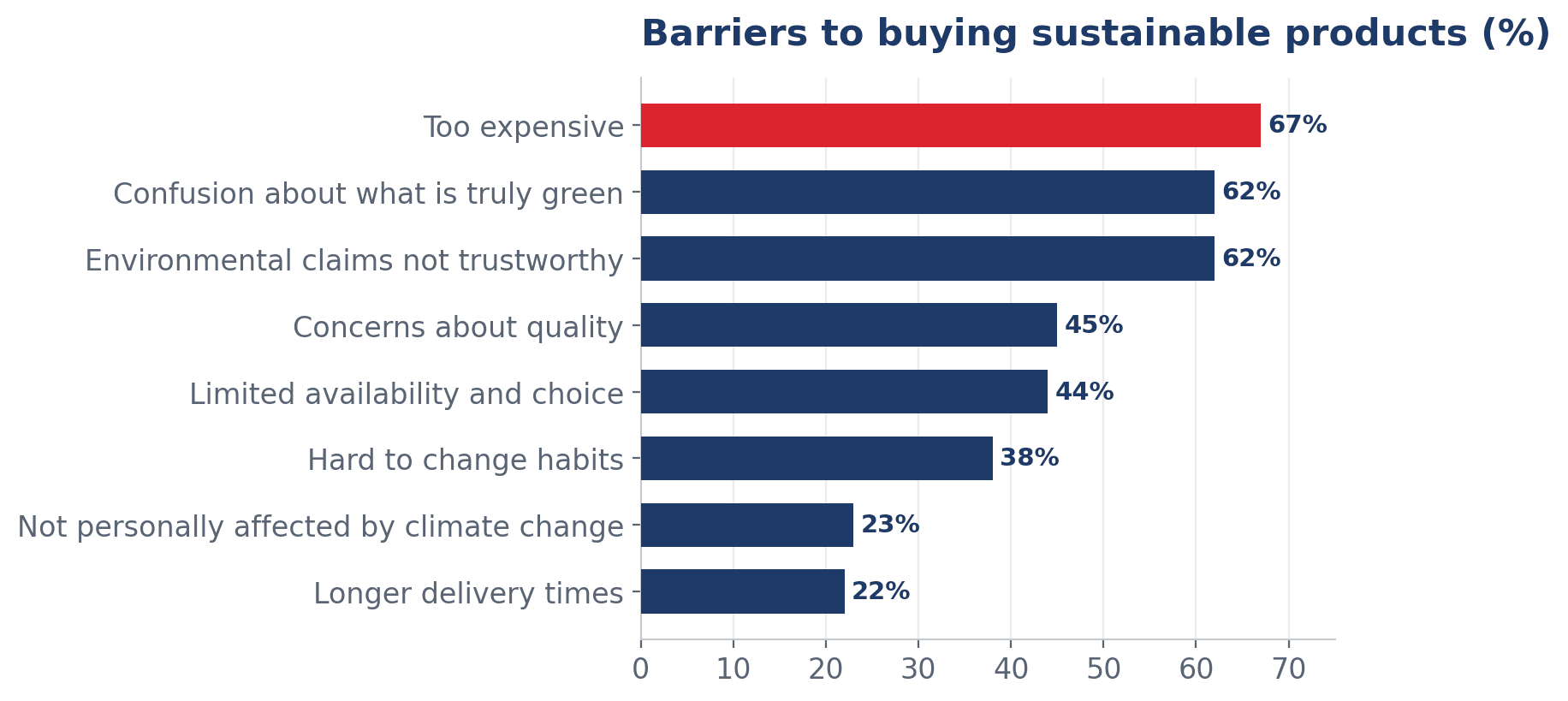
InfoCons Consumer Protection – Barriers to sustainable consumption. Based on the data from the Consumer Conditions Scoreboard 2025.
InfoCons Consumer Protection – The Number One Barrier: Cost (67%)
Two thirds of consumers (67%) say sustainable products and services are simply too expensive. After years of rising prices, many households feel they cannot afford to pay a premium to be greener, even when they would like to.
InfoCons Consumer Protection – Confusion and Mistrust (62% and 62%)
Two further barriers tie at 62%: confusion about which products are genuinely environmentally friendly, and mistrust of environmental claims. When labels are unclear or exaggerated, consumers cannot tell honest products from ‘greenwashing’ – so they hesitate.
InfoCons Consumer Protection – Quality, Choice and Habits (45%, 44%, 38%)
Other barriers include doubts about the quality of sustainable products (45%), limited availability and choice (44%), and the difficulty of changing long-standing habits (38%). These show that making the green choice is not always the easy or convenient one.
InfoCons Consumer Protection – What This Means for You as a Consumer
The barriers are real, but some can be overcome. InfoCons Consumer Protection encourages consumers to look for official, independent eco-labels rather than vague ‘eco’ wording, compare the lifetime cost of durable products (which can be cheaper over time), and report misleading or exaggerated environmental claims. Clear, honest information is your right – and the best tool for shopping greener without overpaying.
Signature: InfoCons Consumer Protection Department