
InfoCons · Consumer Protection · Green Transition Country Briefing
Austria: About 6 in 10 People (56%) Shop with the Planet in Mind — 3 of 29 in Europe, Above the EU Average | InfoCons Consumer Protection
A simple, plain-English look at how Austria compares with the rest of Europe on green shopping. Written for everyone — native English speakers and people across the EU with everyday English.
What This Austria Guide Is About
Every two years the European Union asks people in 29 countries (the 27 EU members plus Iceland and Norway) how they shop. One question is simple: did the effect a product has on the planet change something you bought recently? In Austria, 56 out of every 100 adults said yes — about nearly 6 in 10. This short guide explains what that number means and how Austria compares with the rest of Europe. All the numbers come from the EU’s Consumer Conditions Scoreboard 2025.
|
Austria in one line 56 out of 100 people (nearly 6 in 10) think about the planet when they shop. That is place 3 out of 29 in Europe, and 13 points above the EU average of 43 out of 100. |
Do People in Austria Think About the Planet When They Shop?
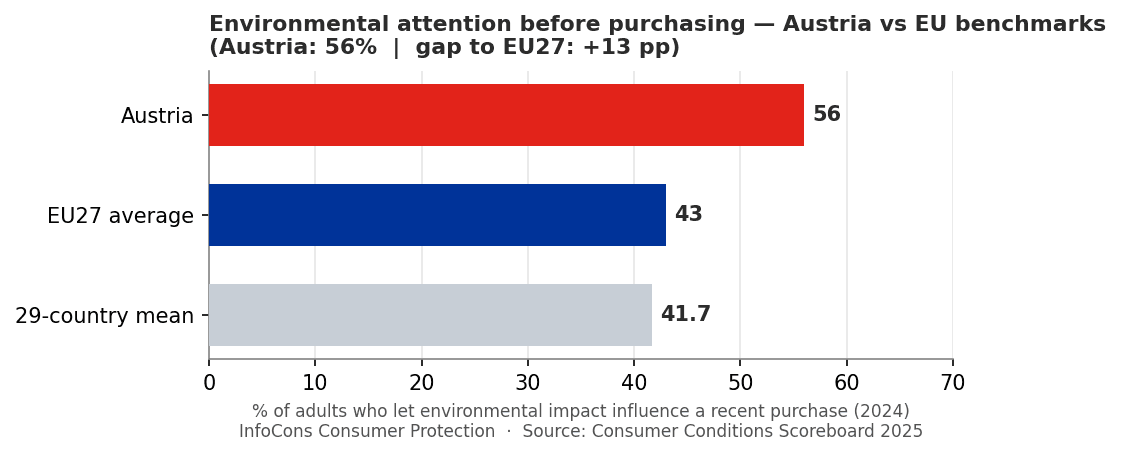
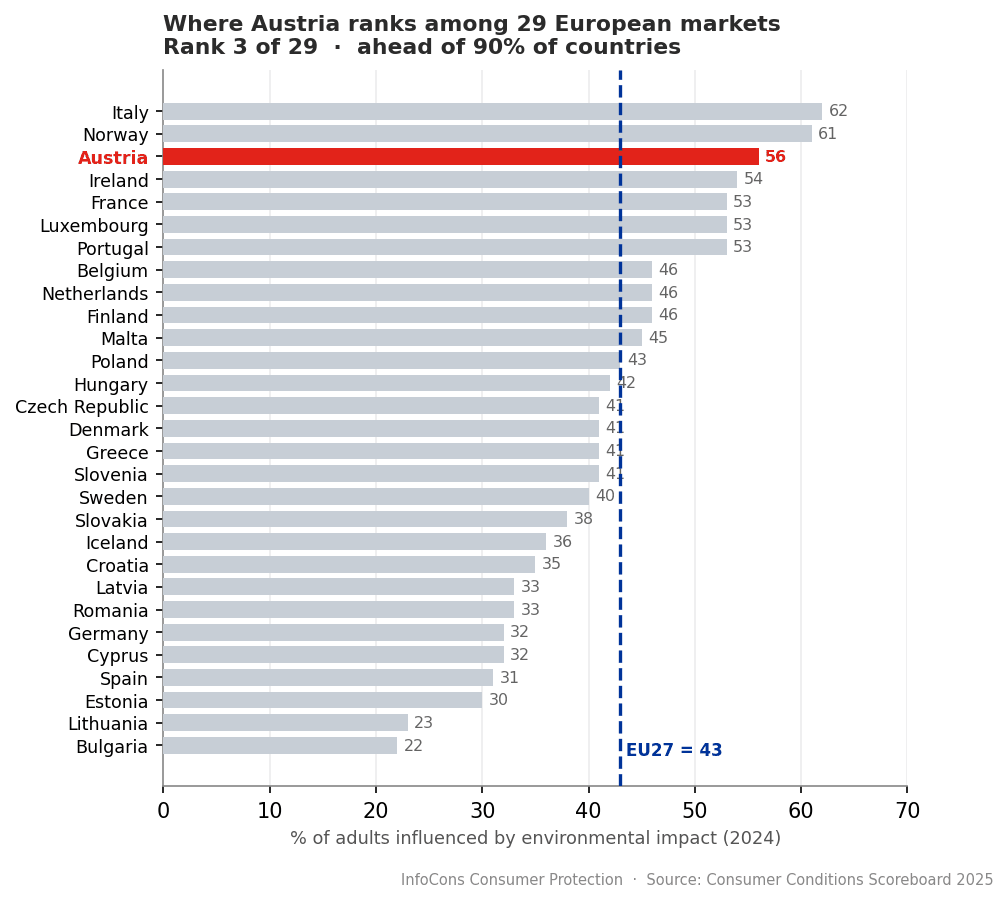
In Austria, 56 out of every 100 adults — about nearly 6 in 10 — say the environment changed at least one thing they bought recently. The EU average is 43 out of 100 (about 4 in 10). So Austria is 13 points above the average. In the full list of 29 countries, 2 score higher than Austria and 26 score lower, which is why Austria sits in place 3.
|
Green shopping (2024) |
Austria |
EU average |
29-country average |
Place /29 |
Vs EU |
|
People who thought about the planet when buying (out of 100) |
56 |
43 |
41.7 |
3 |
+13 pts |
|
What this infographic shows — This picture compares three numbers as bars: Austria (56), the EU average (43) and the average of all 29 countries (41.7). A longer bar means more people think about the planet when they shop. Austria’s bar is longer than the EU bar, so people here are more likely than the typical European to do this. |
|
What this infographic shows — This picture lists all 29 countries from the most green-minded shoppers (Italy, 62) down to the least (Bulgaria, 22). Austria is the red bar — just behind Norway (61) and just ahead of Ireland (54). The dashed line is the EU average (43). Bars that reach past the line beat the EU average; bars that stop before it do not. |
|
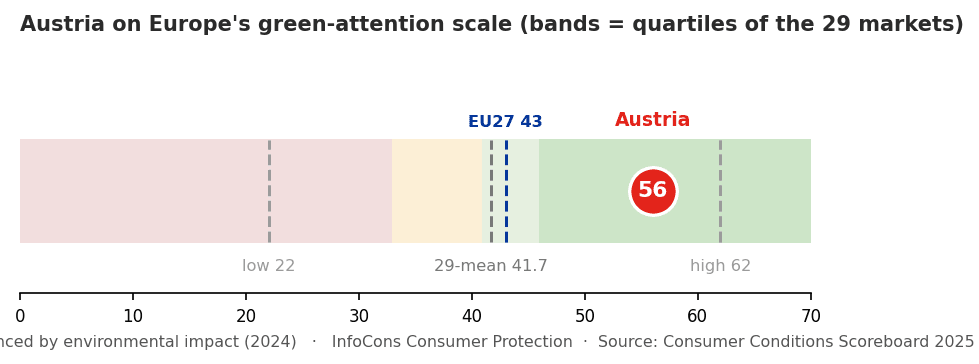
What this infographic shows — Think of this picture as a ruler from 0 to 70. The 29 countries are split into four equal groups, shown as coloured bands. Austria’s red dot at 56 sits in the top group. The lowest country (Bulgaria, 22) and the highest (Italy, 62) are at the two ends, and the EU average (43) is marked for comparison. |
One thing to keep in mind: across the whole EU, this number fell by 13 points between 2022 and 2024, in 23 of the 27 EU countries. So Austria’s result is part of a wider drop, not just a local story.
What Stops People From Buying Green?
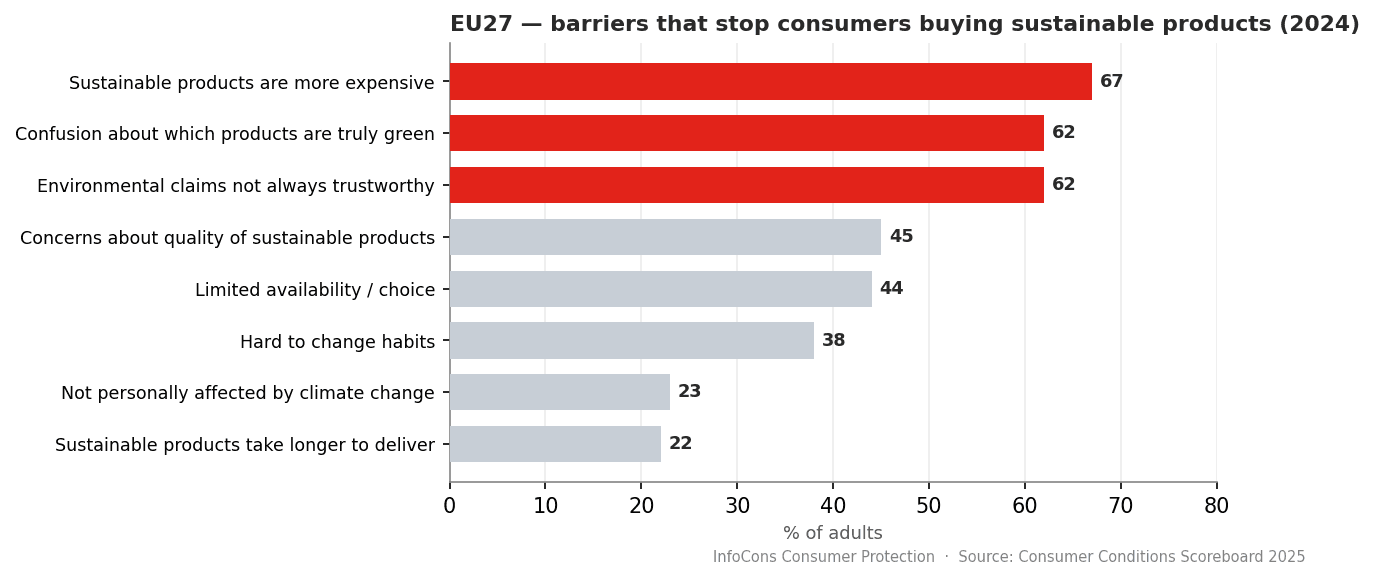
Why don’t people — in Austria and everywhere else — buy green more often? The EU asked, and the answers are the same problems shoppers face here too.
|
What this infographic shows — Across the EU, the top reasons are: green products cost too much (67 out of 100 people say so), it is hard to know which products are really green (62), and people do not trust green claims (62). Worries about quality (45) and few choices in the shops (44) come next. Only 23 out of 100 say they simply do not care. In short, the problem is mostly price and confusion — not that people do not want to help the planet. |
Do People Trust ‘Green’ Labels?
If a shopper in Austria does not believe a “green” label, that label stops working. Across the EU, that trust is going down.
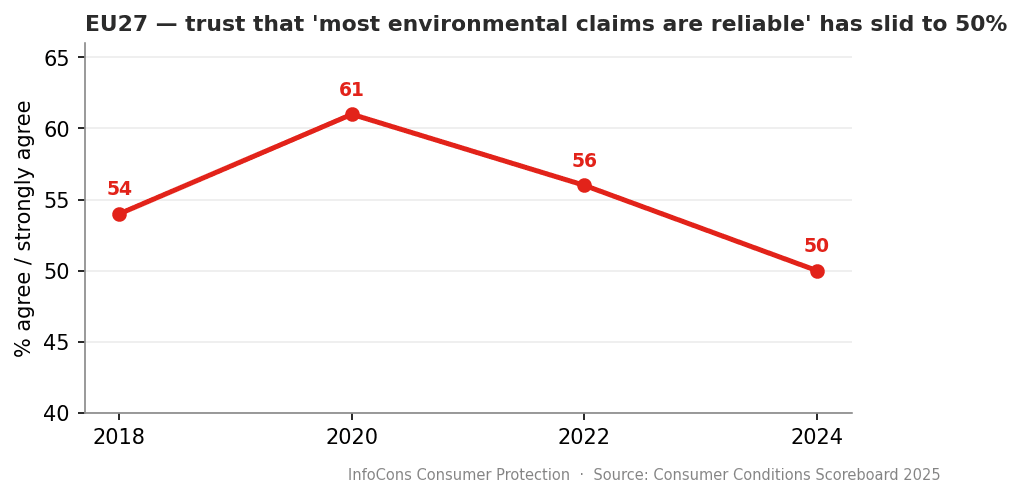
|
What this infographic shows — In 2020, 61 out of 100 people believed most green claims on products. By 2024 it was only 50 out of 100 — that is just half. The EU says France and Poland pushed this number down the most. The lesson: even where many people care about the planet, weak trust in labels can hold green shopping back. |
Repair It, or Throw It Away?
Fixing things we already own is one of the easiest ways to help the planet, and EU rules on guarantees and repair apply in Austria too. Here is what people across the EU actually do.
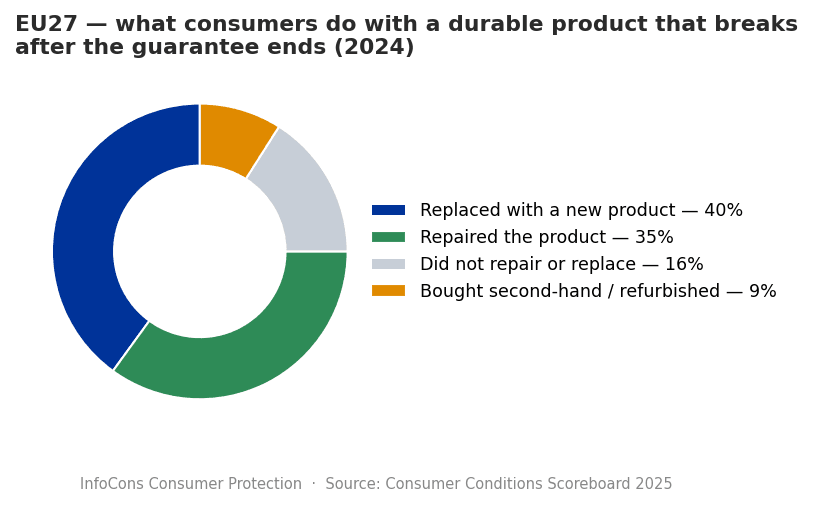
|
What this infographic shows — When a phone, laptop or fridge breaks after its guarantee ends, 40 out of 100 people buy a new one, 35 repair it, and only 9 buy a used or refurbished one. The main reason people do not repair is simple: it costs too much (61 out of 100). The next reason is that they just prefer to buy new (49 out of 100). |
What This Means for You
People in Austria care about the planet more than the EU average. The main risk here is “greenwashing” — companies making products look greener than they really are. So clear, honest labels and fair prices matter a lot, to protect the people who are already trying to do the right thing. Remember the EU-wide drop of 13 points since 2022: even strong countries can slip when people stop trusting the information they get.
All numbers in this guide come only from the Green Transition part of the EU’s Consumer Conditions Scoreboard 2025 (survey done in November 2024 in the 27 EU countries plus Iceland and Norway). The score for Austria is the ‘think about the planet when buying’ number from the country summaries; the reasons, trust and repair numbers are EU-wide.
Signature: InfoCons Consumer Protection Department for Green Transition