
Living in Austria?
Prices Are About 29% Higher Than in 2019
That's no. 16 of 27 EU countries for keeping prices steady (the EU average rise was about 27%). Here's what it means for your shopping, your bills and your rights.
In plain English. This guide compares Austria with the other 26 EU countries, using real numbers from the European Commission's Consumer Conditions Scoreboard 2025. It is written for everyone — including people moving here to study, teach or work. Where Austria does better than the EU average, that is good news for you. Where it does worse, it is something to keep an eye on.
Austria at a Glance — InfoCons Consumer Protection
The first picture shows how people in Austria feel about shopping, compared with the EU average. The red dot is Austria; the blue circle is the EU average. The further the red dot is to the right, the more people said yes.
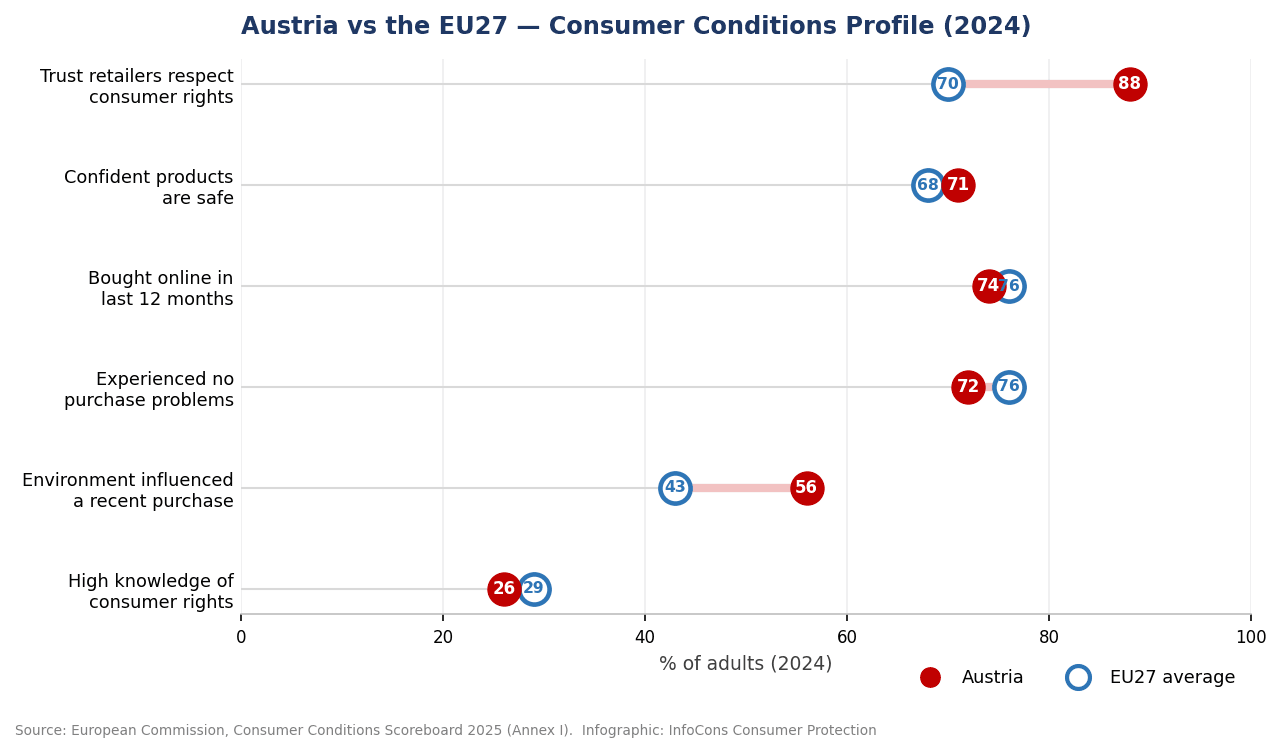
Picture 1: Austria compared with the EU average (2024, % of people). Red = Austria; blue circle = EU average.
What this picture means, in simple words: In Austria, 88% of people think shops and companies treat customers fairly (higher than the EU average of 70%). 71% feel the products on sale are safe (higher than the EU average of 68%). 74% bought something online in the last year (lower than the EU average of 76%). 72% had no problem worth complaining about when shopping (lower than the EU average of 76%). 56% thought about the environment when buying something recently (higher than the EU average of 43%). And only 26% really know their basic shopping rights (lower than the EU average of 29%).
1. Cost of Living: How Much Prices Have Gone Up — InfoCons Consumer Protection
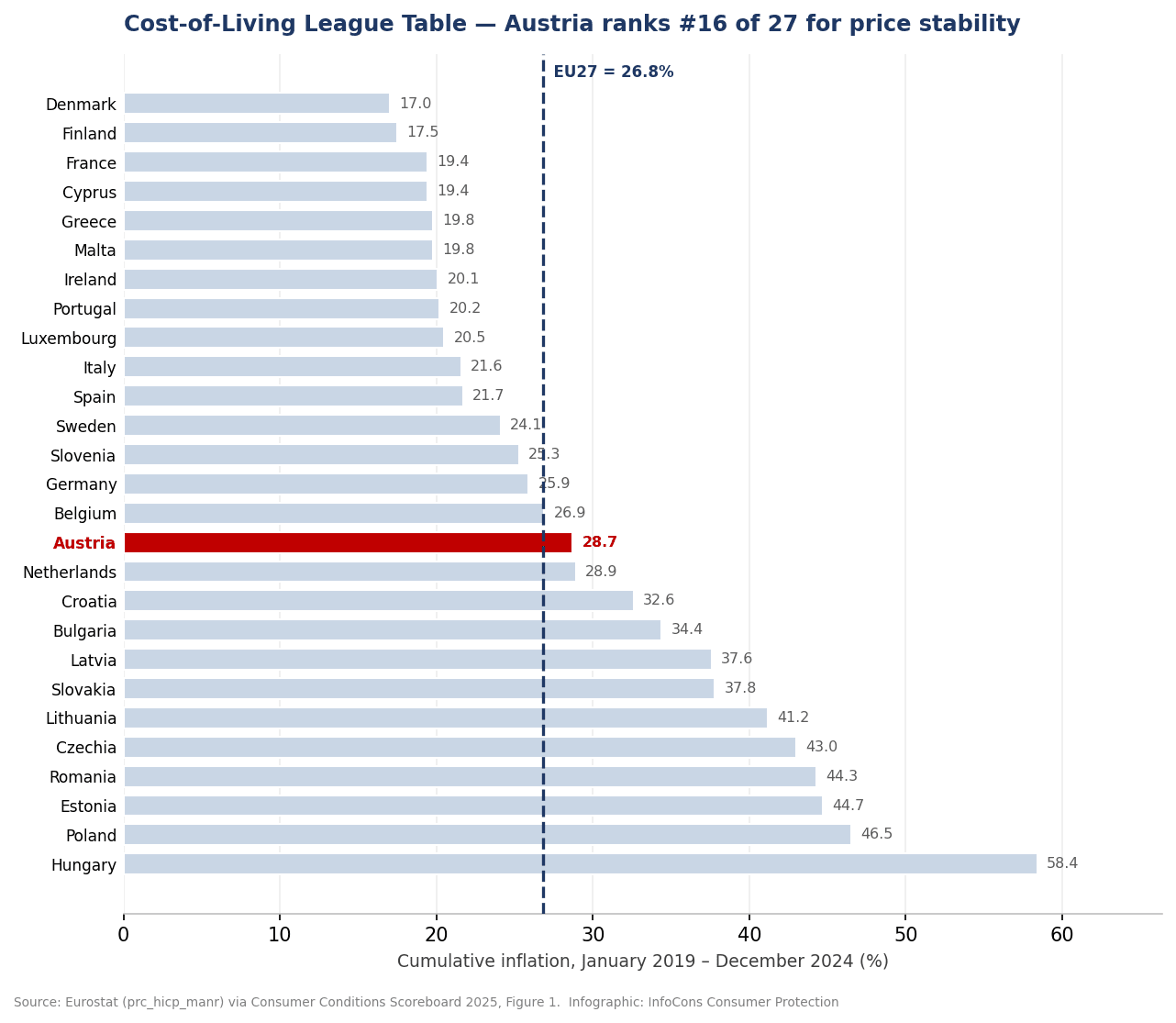
Picture 2: How much prices rose between 2019 and 2024 in each EU country. Austria is in red; the dashed line is the EU average (about 27%).
What this picture means, in simple words: Between 2019 and 2024, prices in Austria went up by about 29%. Out of 27 EU countries, that puts Austria at no. 16 for keeping prices steady (no. 1 means prices rose the least). The EU average rise was about 27%. Prices here rose more than in most EU countries. So if you live on a fixed income — like a student grant or a set salary — your money bought less by the end of this period than in many other places.
This is part of a bigger picture across the EU. Prices stopped rising so fast by the end of 2024 — the yearly rate fell to 2.7%, down from a high of 11.5% in late 2022. But everyday life is still much more expensive than before. Across the EU, energy cost about 44% more than in early 2021, and food cost about 32% more. Some basics jumped even higher: olive oil almost doubled (up nearly 100%) and sugar rose about 49%. Many people also noticed two tricks: smaller packs for the same price ("shrinkflation" — 74% noticed this) and lower quality for the same price (52% noticed this). These happen in Austria too.
Simple tip: look at the price per kilo or per litre, not just the big number on the front. If a pack gets smaller but the price stays the same, that is a hidden price rise. Under EU rules, shops must not mislead you about a product's price or size.
2. Shopping Online: Easy, but Watch Out — InfoCons Consumer Protection
In Austria, 74% of people shopped online in the last year (lower than the EU average of 76%). Shopping online is easy, but things go wrong more often. Across the EU, online shoppers had a problem about 26% of the time, against 16% for shopping in a real shop. More people now also buy from other countries. And there are traps: most online shoppers see fake reviews (66%), deals that look too good to be true (61%), and 45% met some kind of scam in 2024. Almost everyone (93%) is worried about how their personal data is used online.
Good to know: if you buy something online, by phone or by post, you usually have 14 days to change your mind and send it back for a refund — no reason needed. If you buy from a shop in another EU country and have a problem, the European Consumer Centres can help you for free.
3. Buying Greener: Cost and Confusion — InfoCons Consumer Protection
In Austria, 56% of people thought about the environment when buying something recently (higher than the EU average of 43%). Across the EU, fewer people are doing this than before, mainly for two reasons: greener products often cost more (67% say so) and it is hard to know which products are truly green (62%). When something breaks just after the warranty ends, most people buy a new one instead of repairing it — usually because repairs cost too much (61%) or feel like too much hassle (32%).
Simple tip: repairing is often the cheapest green choice. Be careful with "green" labels a company cannot prove — under EU rules, misleading green claims are not allowed.
4. When Something Goes Wrong: Complaints and Refunds — InfoCons Consumer Protection
In Austria, 72% of people had no problem worth complaining about when shopping last year (lower than the EU average of 76% — a higher number is better). Across the EU, when people did have a problem, most (73%) did something about it — usually by going back to the shop (85%). Many others stayed quiet because they thought it would take too long (57%) or would not work (51%), or because the amount was small (45%). People are also less happy than before with how shops handle complaints: 53% were satisfied in 2024, down from 65% in 2022.
Simple tip: keep your receipt and any emails. Complain to the shop in writing first. If the shop will not help, you can go to your country's consumer authority, or to a free service that settles disputes without going to court. Knowing where to go is the biggest difference between getting your money back and giving up.
5. Your Rights, Trust and Safety — InfoCons Consumer Protection
Trust: 88% of people in Austria think shops treat customers fairly (higher than the EU average of 70%). Knowing your rights: only 26% really know their basic rights (lower than the EU average of 29%). Safety: 71% feel the products on sale are safe (higher than the EU average of 68%).
Across the EU, safety checks are getting stronger. The EU's alert system for dangerous products sent out 4,137 warnings in 2024 — 22% more than the year before. The most common danger was chemicals in things like cosmetics, jewellery and toys. So products are watched closely, but it always helps to know your own rights.
Four rights worth knowing: (1) If you buy online, by phone or by post, you have 14 days to change your mind and get a refund. (2) A company cannot suddenly raise the price in your contract without letting you cancel. (3) If something you bought new breaks within two years, and it was not your fault, you can have it repaired or replaced for free. (4) If you receive something you never ordered, you do not have to pay for it.
What This Means for You in Austria — InfoCons Consumer Protection
- Plan for higher prices. Prices are about 29% higher than in 2019 (no. 16 of 27). The level matters more for your budget than the latest monthly number.
- Shop online with the 14-day rule in mind. 74% of people here shop online. If something goes wrong, you have rights — and free help for cross-border problems.
- Learn your basic rights. Only 26% of people here know them well. Five minutes reading the four rights above can save you money.
- Know where to complain before you need to. Most people who take action get a result. Start with the shop, then your consumer authority.
Note for teachers and researchers: the numbers in this guide come straight from the Consumer Conditions Scoreboard 2025 — how much prices rose from Eurostat, and the six everyday measures from the Scoreboard's country summaries. EU averages are exact, and the rankings compare all 27 EU countries. You can use these figures in class or research.
Signature: InfoCons Consumer Protection – Communication Department
Source: European Commission, Consumer Conditions Scoreboard 2025. Country numbers: Eurostat (prices) and the Scoreboard country summaries.