
Chemical Risk in 97.4% of Hair-Dye and Colourant Cosmetic Products! Check What You Buy! Choose Cosmetics Wisely with InfoCons!
As part of the campaign "Check What You Buy! Choose Cosmetics Wisely with InfoCons!", InfoCons works to inform and educate consumers about the risks associated with the use of non-compliant cosmetic products identified in the European Alerts found in the InfoCons App, by promoting accurate information that is scientifically grounded and supported by the expertise of specialists in the field.
Hair dyes and colourants are applied directly to the scalp and can contain strongly allergenic substances. As part of the campaign "Check What You Buy! Choose Cosmetics Wisely with InfoCons!", InfoCons analysed the risks associated with these products, based on the data in the InfoCons App. 156 products in the hair-dye and colourant category were the subject of the study, based on the Alerts in the Alerts section of the InfoCons App. The result of the study: almost all the problems are chemical in nature and concentrate on a single substance.
Types of risk for products in the hair-dye and colourant category
The risk is chemical: 97.4% of the alerts concern a chemical risk, and the rest are isolated cases (microbiological, environmental or other health risks).
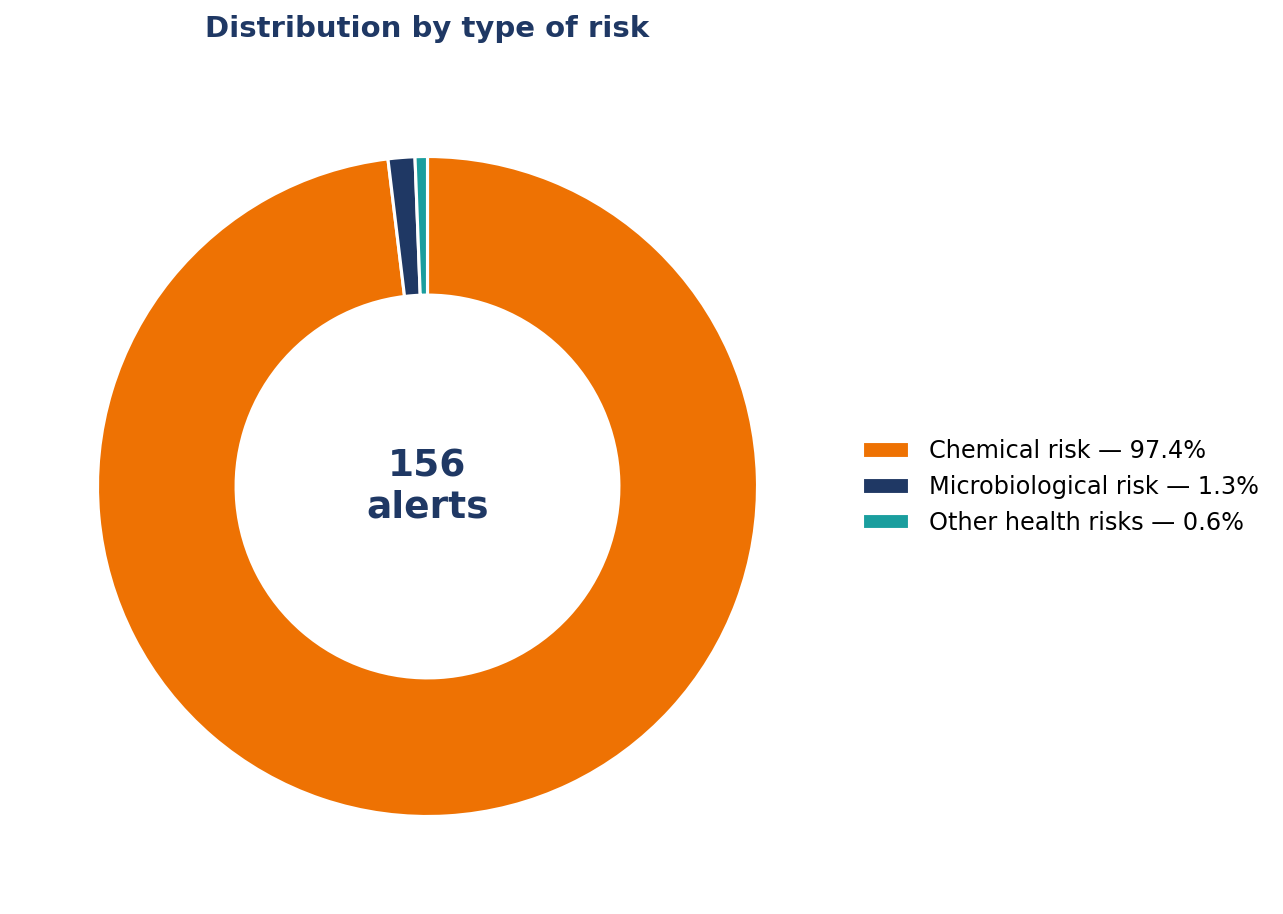
Distribution of alerts by type of risk.
Which substances and hazards appear most often
The most frequent hazard remains the banned ingredient Lilial (butylphenyl methylpropional), present in 85.3% of alerts. Specific to this category, however, is p-phenylenediamine (PPD), identified in 9.6% of alerts — a colourant used in hair dyeing, known as a strong sensitiser that can cause severe allergic reactions of the skin and scalp. Hydrogen peroxide and oxidising agents (2.6%) and, rarely, azo dyes also appear.
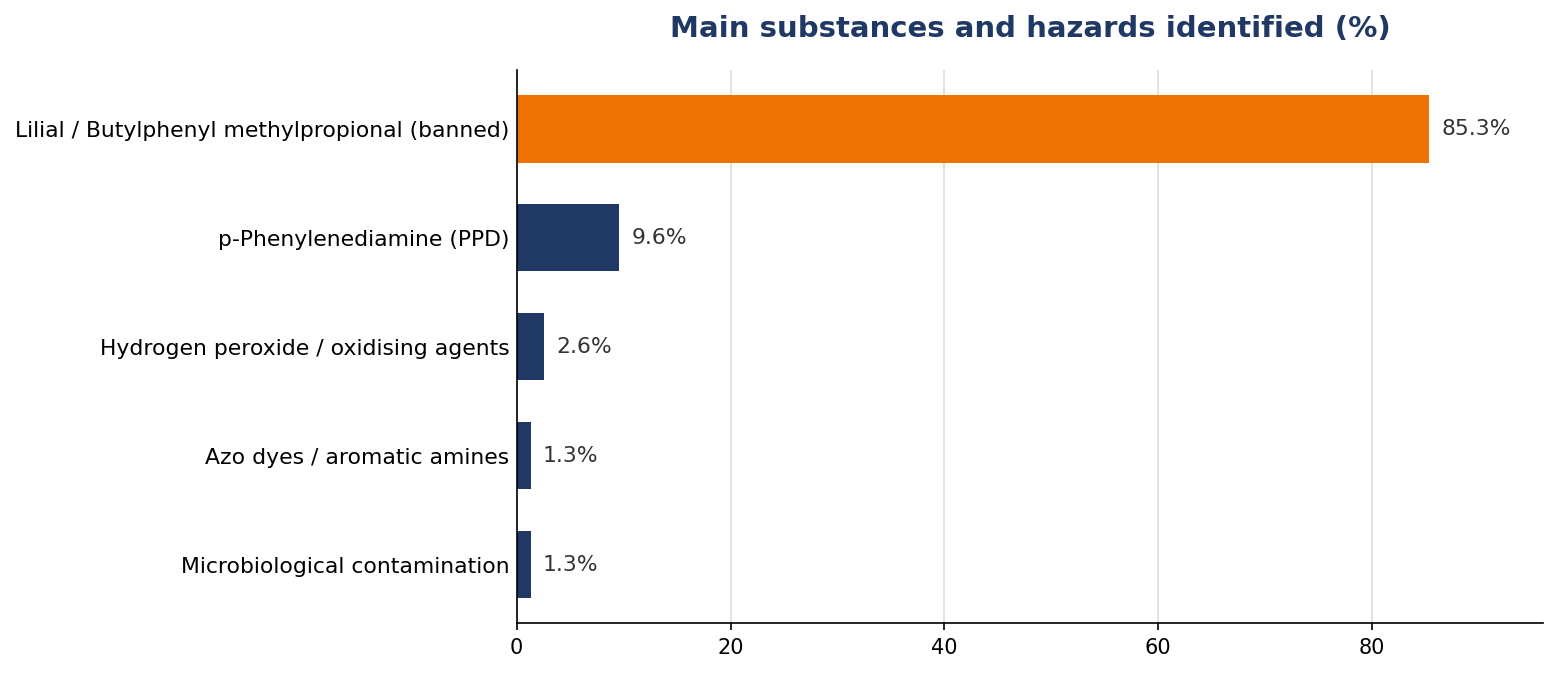
Main substances and hazards identified.
The table below presents these hazards and their effects on health:
|
Substance / hazard |
% of alerts |
Health effects |
|
Lilial / Butylphenyl methylpropional |
85.3% |
Fragrance ingredient banned in the EU since 2022; toxic to reproduction and a skin sensitiser |
|
p-Phenylenediamine (PPD) |
9.6% |
Strong sensitiser; can cause severe allergic reactions of the skin and scalp (swelling, dermatitis), rarely serious reactions |
|
Hydrogen peroxide / oxidising agents |
2.6% |
Skin and eye irritation; at high concentrations, damage to the scalp and hair |
|
Azo dyes / aromatic amines |
1.3% |
Some are carcinogenic or banned in cosmetics |
|
Microbiological contamination |
1.3% |
Bacteria, yeasts or mould; infections and irritation |
The substances targeted in the Alerts for hair-dye and colourant products:
- Lilial / Butylphenyl methylpropional – 85.3% – Fragrance ingredient banned in the EU since 2022; toxic to reproduction and a skin sensitiser
- p-Phenylenediamine (PPD) – 9.6% – Strong sensitiser; can cause severe allergic reactions of the skin and scalp (swelling, dermatitis), rarely serious reactions
- Hydrogen peroxide / oxidising agents – 2.6% – Skin and eye irritation; at high concentrations, damage to the scalp and hair
- Azo dyes / aromatic amines – 1.3% – Some are carcinogenic or banned in cosmetics
- Microbiological contamination – 1.3% – Bacteria, yeasts or mould; infections and irritation
In this category, the risks are predominantly to health — from reproductive toxicity to strong allergic reactions caused by colourants such as PPD. The direct environmental impact is insignificant.
InfoCons recommendations
For hair dyes and colourants, InfoCons recommends that consumers:
- Check the product in the InfoCons App before buying or using it.
- Do a sensitivity (patch) test before every colouring: apply a small amount to the skin 48 hours in advance, especially for products containing PPD.
- Read the list of ingredients and avoid products containing banned substances such as Lilial, or colourants above the permitted limits.
- Be careful with "black henna" products — they may contain PPD in dangerous concentrations.
- Follow the instructions for use, wear gloves and avoid contact with the eyes and with irritated scalp.
- Choose products with a complete label, in Romanian, with the manufacturer or importer clearly identified.
- Stop using the product and consult a doctor if itching, swelling or other reactions appear.
Signature: InfoCons Consumer Protection Department – Cosmetic Products