
Bee Venom : Composition, Properties and Consumer Information – InfoCons Consumer Protection Informs You
Bee venom is a compound perfectly adapted to its natural functions: the defense of bees and the colony. It is synthesized in the venom glands of queen and worker bees and stored in venom sacs. During the stinging process, it is released through the sting in liquid form. Bee venom is a biological product specific to bees and is not among the active principles transmitted from plants.
The active components of bee venom, in small amounts (equivalent to fewer than 100–300 stings for an adult), can be very beneficial for human health when administered individually and by specialized professionals.
Administered incorrectly, bee venom can cause allergic reactions and irritation in some individuals. Therefore, before therapeutic use, all necessary measures must be taken to protect the patient (allergy testing, correct dosage) and the hive, with the bee therapist ensuring complete safety when handling this product.
Physical Characteristics
Bee venom can be found in two main forms:
- Liquid form – immediately after extraction or injection through a bee sting;
- Dry form – obtained after collection with special venom collectors.
Bee venom is a colorless liquid with a spicy-bitter taste and an aromatic odor similar to ripe bananas. It is slightly acidic (pH 5.0–5.5) and changes blue litmus paper to red, indicating an acidic reaction.
The venom dries at room temperature in less than 20 minutes, losing approximately 65–70% of its original weight. After evaporation, approximately 0.1 mg of pure dry venom can be collected from a single bee. Pure dry venom has a yellow-brown color and a specific weight of 1.313 g/cm³.
Toxicity
The toxicity expressed by LD50 is 2.8 mg/kg (intravenous administration in mice). This means that 50% of mice will die when a dose of 2.8 mg of venom per kilogram of body weight is injected intravenously.
Bee venom is resistant to cold, and freezing does not appear to reduce its toxicity. When dry, it is resistant to heat, even at 100°C. If protected from moisture, dried bee venom can maintain its toxic properties for several years.
It has a polycrystalline structure. Microscopic examinations have shown that bee venom, when dissolved in water, assumes a characteristic physical structure that varies in shape and size. This makes it possible to distinguish between bee venom and other venoms such as wasp or viper venom.
InfoCons Consumer Protection informs you – What is MERCOSUR and how does it influence international trade ? InfoCons Consumer Protection informs you in the context of the EU–MERCOSUR Agreement !
COMPOSITION
Bee venom is a complex mixture of proteins, peptides and small molecular compounds. The main components are proteins and peptides. The composition differs slightly between fresh and dry venom, particularly regarding volatile compounds, although overall biological activity remains similar. Crystallized bee venom is commonly used in cosmetics and medicine.
Proteins (Enzymes)
Enzymes are proteins that catalyze specific biochemical reactions.
Bee venom contains five major enzymes:
- Phospholipase A2
- Phospholipase B
- Hyaluronidase
- Phosphatase
- α-Glucosidase
Polypeptides
More than 60 identifiable components have been detected in bee venom.
Melittin
Bee venom contains numerous polypeptides, the most important being melittin, which represents approximately 50% of the dry weight of bee venom. Melittin has a molecular weight of 2,840 daltons and can reach 12,500 daltons in tetrameric form. Electrophoretic methods for protein and melittin identification are specific to each honey bee species.
Figure 1 – Structure of Melittin
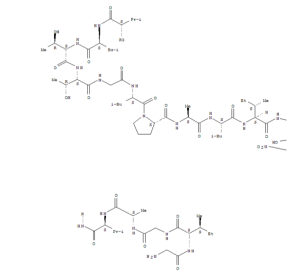
Melittin (C131H229N39O31) is the principal toxin of Apis mellifera (bee venom). It is characterized as a cationic peptide, soluble in water (charge +6). Its toxic properties are related to the hemolytic characteristics of the protein, causing spontaneous rupture of erythrocytes.
Although it can be lethal for humans under certain conditions, melittin is also an antimicrobial channel-forming peptide capable of fighting pathogens. The active peptide is released from promelittin precursors and becomes formylated during biosynthesis.
This biosynthesized melittin consists of 26 amino acid sequences, with a hydrophobic amino-positioned group at one end and a hydrophilic carboxyl group at the other, arranged asymmetrically with an inclination of approximately 120°.
The polar secondary chain of melittin forms a hydrophilic “shell” around the molecule, while the proline residue in position 14 allows the molecule to bend. This amphiphilic structure enables melittin to interact with biological membranes.
The amino acid sequence of the melittin monomer is:
NH2-Gly-Ile-Gly-Ala-Val-Leu-Lys-Val-Leu-Thr-Thr-Gly-Leu-Pro-Ala-Leu-Ile-Ser-Trp-Ile-Lys-Arg-Lys-Arg-Gln-Gln-CONH2
Figure 2 – Molecular Structure of Melittin
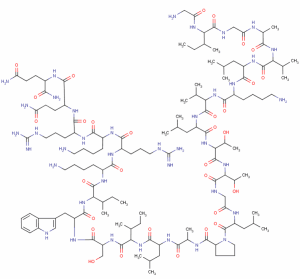
The image shows the molecular structure of melittin, including its primary, secondary and tertiary structures. The molecule contains both hydrophobic and hydrophilic regions and presents a loop structure in its center.
InfoCons Consumer Protection informs you – InfoCons – Consumers Protection – Romania: Events and activities organized to mark World Intellectual Property Day 2026
Monomeric melittin aggregates to form a tetramer and adopts an alpha-helical conformation, allowing interaction with sulfated sugars located on the surface of cell membranes.
This configuration results from the cationic regions of the protein aligning with negatively charged membrane structures. Before penetrating the membrane, the tetramer must first dissociate into monomers.
In its natural state, melittin exists in a tetrameric form. To penetrate the cell membrane, it must first break down into individual monomeric chains.
Melittin possesses biological importance due to its antimicrobial and lytic abilities. It is frequently used as a model compound for studying protein-lipid interactions within cellular membranes.
The peptide functions primarily through pore formation. Positively charged amino acid residues interact with the polar phospholipid heads of biological membranes.
Melittin rapidly binds to the hydrophobic side of the membrane, either perpendicular or parallel to the membrane plane. Depending on molecular orientation, pore formation may be promoted or inhibited.
The amphiphilic peptide generates voltage-dependent channels that allow cellular contents to disperse. These channels form a toroidal pore structure, considered ideal for melittin function.
Before melittin penetrates membranes, naturally occurring molecules capable of inhibiting peptide lytic activity have been identified.
In the presence of cholesterol, pore formation becomes more difficult due to lipid condensation effects. In contrast, cholesterol-deficient membranes are more fluid and therefore more susceptible to melittin-induced pore formation.
Despite the fact that melittin may be lethal when injected intravenously into humans, this peptide exhibits significant antimicrobial activity.
When applied correctly, melittin has been investigated for potential therapeutic applications in:
- Multiple sclerosis;
- Arthritis;
- Rheumatism;
- Eczema;
- Psoriasis;
- Herpes.
Unlike many other peptides, melittin possesses a unique anti-inflammatory effect capable of reducing chronic pain.
Adolapin
Adolapin constitutes approximately 2–5% of bee venom peptides.
It acts as an anti-inflammatory and analgesic compound by blocking cyclooxygenase activity within the body.
Adolapin has been isolated from bee venom and studied for its contribution to the therapeutic properties attributed to apitherapy.
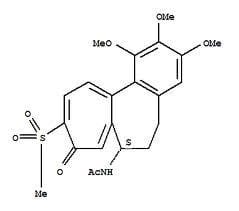
Apamin
Apamin represents approximately 3% of bee venom.
Apamin is a natural octadecapeptide whose structural characteristics allow binding to specific receptors and expression of toxicity in experimental models.
Studies investigating amino acid substitutions in synthetic analogues demonstrated that only leucine at position 10 can be replaced by alanine without significantly reducing biological activity.
Research further demonstrated the importance of:
- Gln-17;
- Arg-13;
- Arg-14;
for maintaining biological functionality.
The interaction between apamin and its receptor occurs through a calcium-activated potassium channel and depends upon a highly specific molecular topology.
Experimental studies have shown that while individual interactions may not independently determine receptor binding, their collective presence is necessary to achieve high biological activity.
InfoCons Consumer Protection informs you – Digital Fairness and Consumer Protection – Addiction , Prevention , Awareness ! InfoCons Consumer Protection informs you!
Additional Bioactive Components
The following compounds are also present in bee venom:
- Peptide 401 / Mast Cell Degranulation Peptide (MCDP) – 3%
- Hyaluronidase – 3%
- Phospholipase A2 – 12%
- Histamine – 0.9%
Small Molecular Compounds
Bee venom contains smaller quantities of naturally occurring molecular compounds, including:
- Amino acids;
- Catecholamines;
- Sugars;
- Minerals.
Sugars have been identified in certain bee venom preparations. However, when bee venom is collected using modern collectors designed to prevent contamination with pollen and nectar, carbohydrate content is generally absent.
Table 1. Dry Mass Composition of Bee Venom
| Substance | Compound | % from dry mass |
| Proteins (enzymes) | Phospholipase A2Phospholipase BHyaluronidasePhosphatasea-Glucosidase | 10-1211-210,6 |
| Peptides | MelittinApaminMCD peptidSecapinPaminAdolapinProcamin A,BProtease inhibitorTertiapin, cardiopep, melittin F | 40-502-32-30,5-21-30,5-11-20,1-0,81-2 |
| Phospholipides | 1-3 | |
| Biogenic amines | HistamineDopamineNoradrenaline | 0,5-20,2-10,1-0,5 |
| Aminoacids | a-aminoacids, aminobutyric acid | 1 |
| Sugars | Glucose, fructose | 2-4 |
| Volatile (feromons) | Complex ethers | 4-8 |
| Minerals | P, Ca, Mg | 3-4 |
Bactericidal and Antimicrobial Effects
Bee venom exhibits bactericidal activity against several microorganisms, including:
- Staphylococcus aureus
- Streptococcus pyogenes
- Escherichia coli
- Salmonella typhi
- Bacillus brevis
- Bacillus cereus
Bee venom has also been shown to inhibit the growth of certain bacteria and fungi. In addition, it demonstrates bacteriostatic effects against microorganisms such as:
- Mycobacterium phlei
- Vibrio cholerae
However, bee venom does not exhibit activity against certain fungi, including:
- Penicillium
- Mucor
Bee venom has been described as possessing:
- Antibiotic activity;
- Antibacterial activity;
- Anti-inflammatory activity.
Particularly noteworthy is the presence of the Mast Cell Degranulation Peptide (MCD), a polypeptide whose anti-inflammatory activity has been reported to be approximately 100 times stronger than hydrocortisone.
Labeling Recommendations
It is recognized that the use of bee venom may involve allergy risks, particularly among individuals who are allergic to bee products. To reduce these risks, appropriate labeling information is recommended.
Recommended Product Warning
Cosmetic products containing bee venom should include the following warning:
Warning: Avoid Bee Venom if you are:
- Asthmatic;
- Allergic to bee stings;
- Allergic to pollen;
- Pregnant.
Keep the product out of the reach of children.
Recommended Instructions for Use
To reduce the risk of adverse effects, product leaflets should contain the following instructions:
Before first use, apply the product to a small area of skin (1–2 cm²), wait 48 hours and, if no adverse effects occur, use according to the manufacturer’s instructions
Topical (Dermal) Skin Application Effects of Bee Venom
The body’s reaction to topical bee venom application includes increased blood circulation in the treated area and stimulation of collagen and elastin production.
Researchers have found that bee venom stimulates the growth of cells known as keratinocytes, which act as a protective barrier against environmental factors such as:
- Bacteria;
- Water loss;
- Damage caused by prolonged sun exposure.
Keratinocytes are located in the outermost layer of the skin and play an important role in maintaining a youthful appearance.
As the body ages, the number of keratinocytes decreases, contributing to:
- Reduced skin elasticity;
- Formation of fine lines;
- Development of wrinkles.
Studies conducted by South Korean researchers have demonstrated that pure bee venom increases the number of keratinocytes, thereby improving skin elasticity.
Bee venom has been used in medicine for thousands of years. Among its active compounds is apamin, a peptide reported to promote muscle relaxation.
InfoCons Consumer Protection informs you – InfoCons Consumer Protection : Nutrition and Mental Health in Children and Adolescents
Bee Venom and Skin Aging
Facial wrinkling is an undesirable consequence of both:
- Extrinsic photoaging;
- Intrinsic aging processes.
At present, there are no universally effective strategies capable of completely preventing facial wrinkles.
The beneficial effects of bee venom serum on clinical signs of skin aging have therefore been evaluated.
Research results indicate that treatment with bee venom serum improved facial wrinkles through:
- Reduction of total wrinkle area;
- Reduction of total wrinkle number;
- Reduction of mean wrinkle depth.
Based on these findings, bee venom serum may be considered an effective ingredient for improving the appearance of skin wrinkles.
Main Bee Venom Fractions, Actions and Effects
| Fraction | Action | Effects |
| Mellitin (50% of dehydrated bee venom) (26 amino acids) | Antibacterial and anti-inflammatory properties. It destabilizes all membrane structures at the level of phospholipids. It stimulates the secretion of ACTH- in the pituitary gland. | Strong anti-inflammatory effects; persistent effects, which act histamine quickly: increased capillary permeability, edema (swelling), increased temperature, itching, pain; increased vitality and feeling of comfort; forces bee venom to attach to the negatively charged cell wall; antioxidant action. |
| Apamin – small basic peptide made up of 18 amino acids | stimulates the central and peripheral nervous system. Stimulates the secretion of serotonin and dopamine; antiarrhythmic. | It increases the central and peripheral pain threshold, decreases pain, increases the feeling of well-being |
| Adolapin | It inhibits the enzymes in the metabolic cascades of arachidonic acid and cyclooxygenase. | Anti-inflammatory and analgesic action (pain relief) |
| Mast cell degranulation peptide (MCDP or peptide 401) | Anti-inflammatory actions (approximately 100 times stronger than hydrocortisone). | Reduces inflammation and pain through local action on tissue inflammation. It activates the adrenal and sympathetic systems. |
| Hyluronidase, secapin, tertiapin, procamine | Substance ―”P” inhibition | Anti-inflammatory, pain reduction. |
Bee venom is a highly complex biological substance composed of proteins, peptides, enzymes, biogenic amines, amino acids, minerals and volatile compounds. Its principal component, melittin, accounts for a significant proportion of its biological activity, while other compounds such as apamin, adolapin and mast cell degranulation peptide contribute to its antimicrobial, anti-inflammatory, analgesic and cosmetic properties. Bee venom continues to attract scientific interest due to its potential applications in medicine, cosmetics and apitherapy, while appropriate safety measures and labeling remain essential due to the risk of allergic reactions in sensitive individuals.
Signature: InfoCons Communication Department
Call responsibly using the emergency numbers!
The Consumers Protection platform offers quick, centralized access to essential and emergency contacts worldwide, helping users connect with services such as Consumer Protection, Ambulance, Fire Brigade, Police, and Tourist Information across all continents.
The UNIQUE Consumer Protection App – InfoCons App !
The InfoCons App is a free, multilingual tool available in 33 languages, empowering consumers worldwide with fast access to consumer protection resources and useful emergency services.